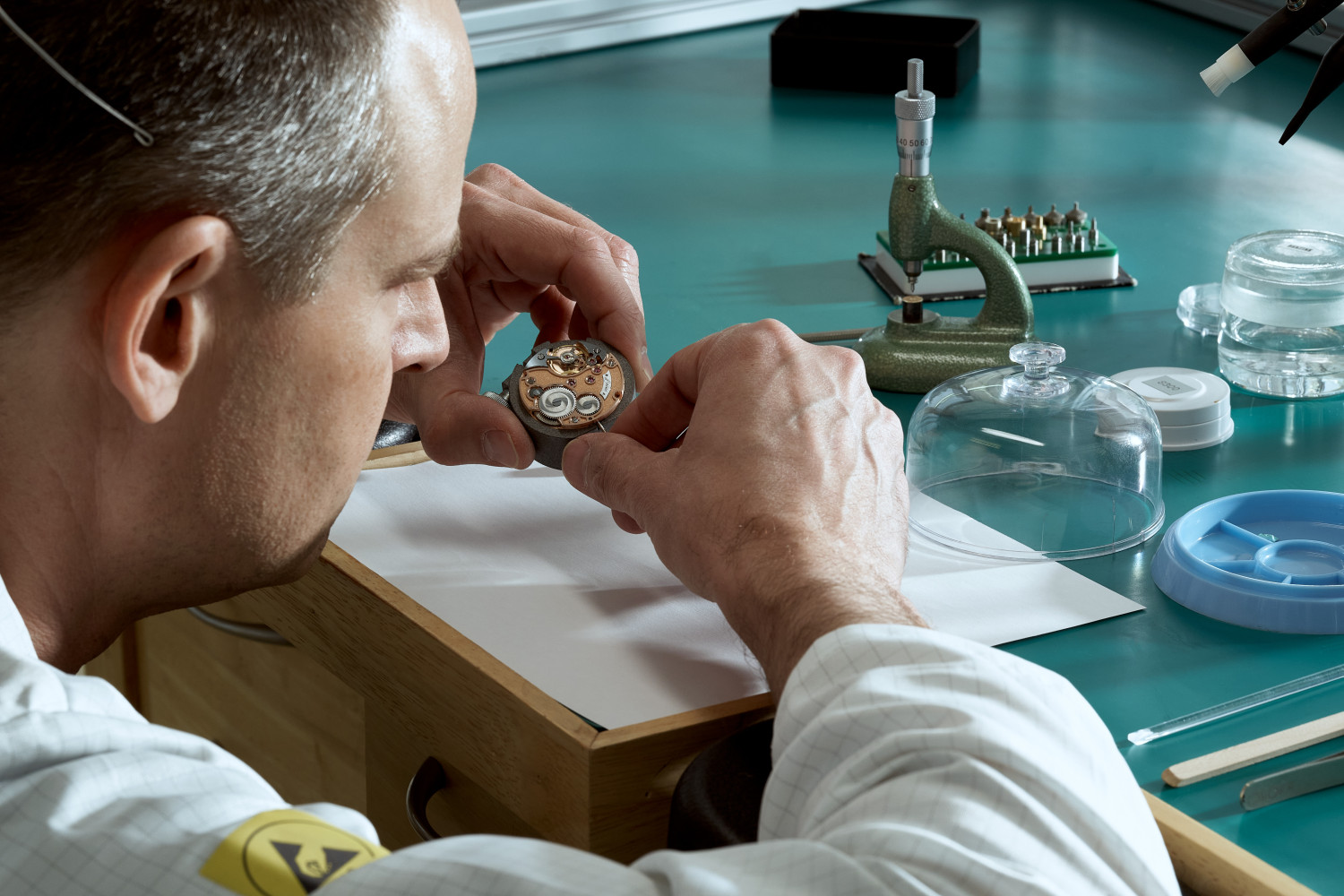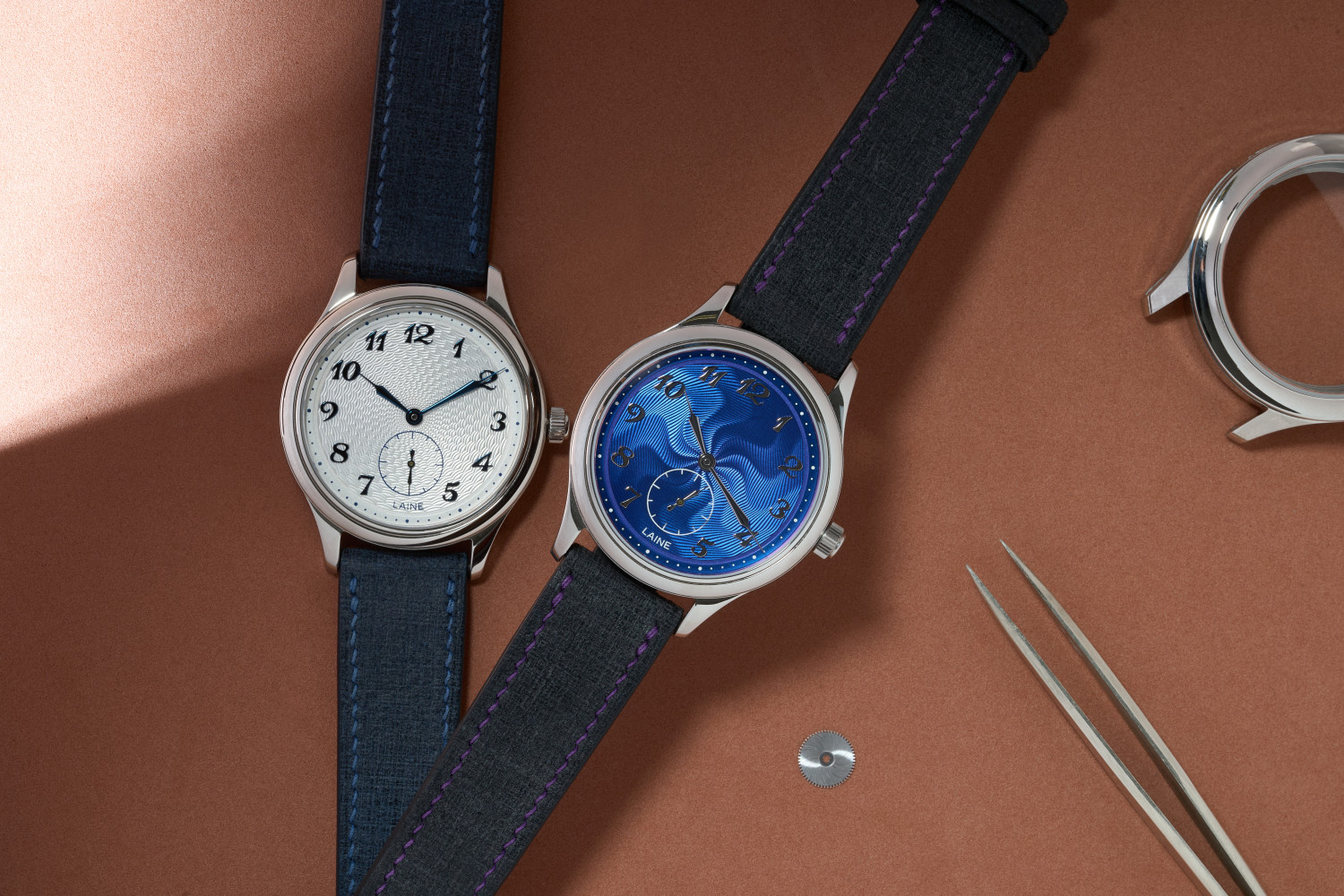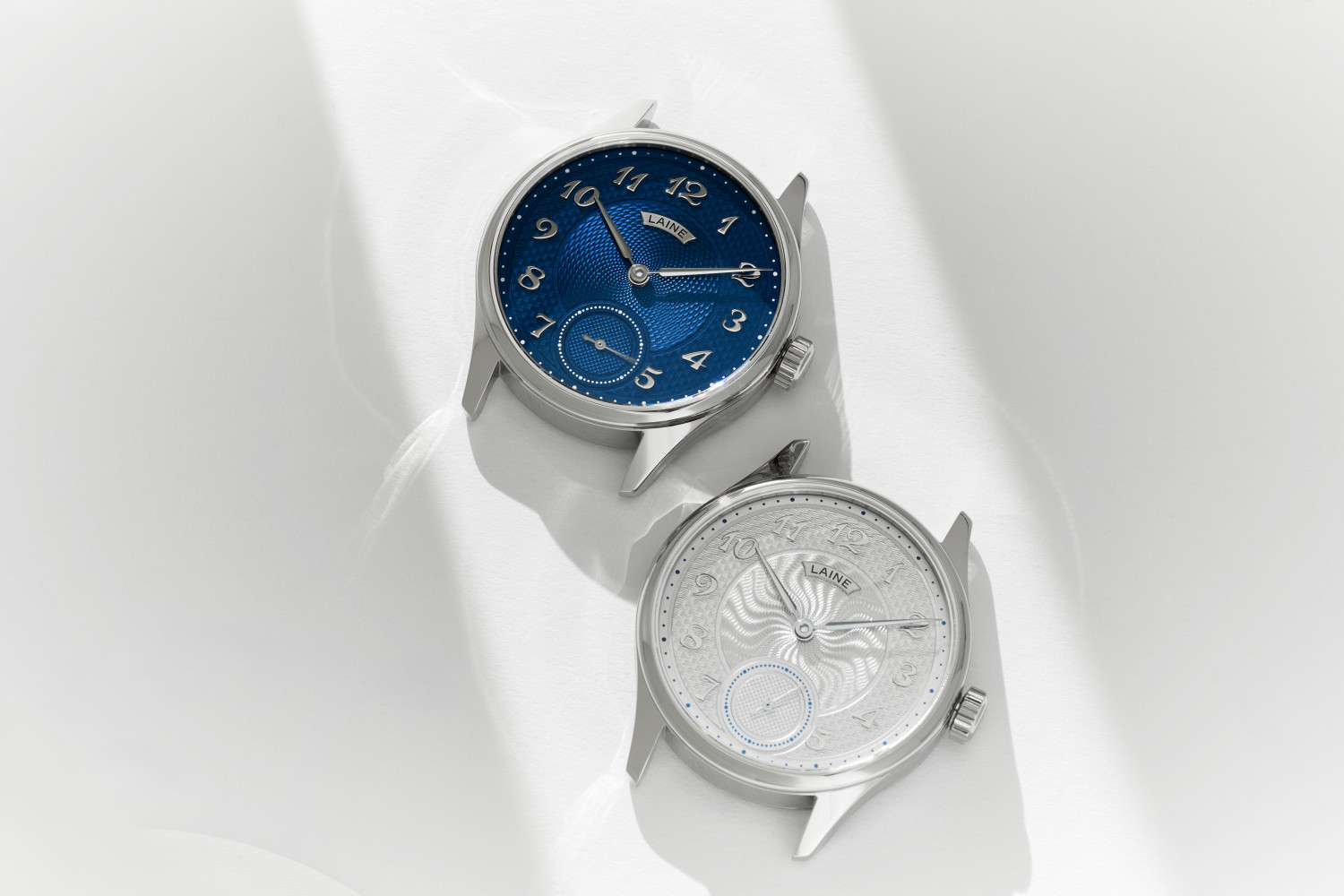

Torsti Laine is one of the most respected figures in contemporary independent watchmaking, admired for combining Finnish precision with the finest traditions of Swiss horology. As the founder of Laine Watches, based in Switzerland's renowned Neuchâtel watchmaking region, he has earned international recognition for creating elegant mechanical timepieces distinguished by hand-cut guilloché dials, meticulous movement finishing, and understated design. Unlike many watchmakers who grew up surrounded by mechanical watches, Laine entered horology later in life. He initially studied computer science and spent nearly a decade working in the technology sector. While successful, he sought a profession where knowledge and craftsmanship would remain timeless. In 2011, he enrolled at Kelloseppäkoulu, the Finnish School of Watchmaking, where his analytical mindset and determination quickly became evident. During his studies, he independently constructed a complete mechanical clock from technical drawings, mastering each unfamiliar process step by step—an experience that continues to shape his methodical approach to watchmaking today.
Laine's exceptional talent was recognized internationally in 2014
when he won the prestigious A. Lange & Söhne Watchmaking Excellence Award
after designing a moon-phase complication for an ETA 6498 movement. The
achievement opened the door to invaluable training with two of the industry's
most respected names. He refined traditional hand-finishing techniques in Kari
Voutilainen's workshop before further developing his skills in the decoration
department at A. Lange & Söhne, gaining a rare combination of artisanal
craftsmanship and structured manufacturing excellence.
In 2016, Torsti Laine founded his own independent atelier, with the first watches reaching collectors the following year. His philosophy centers on creating classical, time-only watches where every element—the dial, movement, and case—is treated as a unified work of art. Rather than relying on excessive complications, Laine emphasizes exceptional hand craftsmanship, particularly through manually executed guilloché dials and painstaking movement finishing that extends even to surfaces rarely seen by their owners. He remains personally involved in every stage of technical development, guilloché engraving, and finishing, ensuring each watch reflects his uncompromising standards.
What
inspired you to become a watchmaker, and how did Finland and Switzerland shape
your journey to founding Laine Watches?
I came to watchmaking later than most. After nearly ten years in
computer science, I wanted to pursue something timeless, where knowledge and
craftsmanship don't become obsolete. A chance conversation about watches led me
to the Finnish School of Watchmaking, and I was accepted just weeks later.
Building a complete mechanical clock during my studies taught me to solve
complex problems step by step.
Finland gave me a strong technical foundation, while Switzerland exposed me to the highest standards of traditional watchmaking through my experiences with Kari Voutilainen and A. Lange & Söhne. Combining Finnish precision with Swiss craftsmanship inspired me to establish Laine Watches in 2016, with the goal of creating beautifully finished, classically designed timepieces built to the highest standards.
What
were the most valuable lessons you learned from working with Kari Voutilainen?
Patience, above everything. In the summer of 2014, I wrote to the
workshop and simply asked: please let me in. I became their summer student. It
was not arranged through the school; I just went. I made actual parts for
Voutilainen watches and learned the Voutilainen decoration style: very
hands-on, very traditional, very slow.
What made the experience so formative was the contrast with my other training. Having won the Lange competition, I was invited to the decoration department at A. Lange & Söhne, which is more industrial and process-based, higher volume but absolutely high quality. I deliberately wanted both: the Voutilainen way and the Lange way. With those two schools, I learned the best of both worlds. The Lange architecture and the Voutilainen patience have stayed with me ever since, and both have a strong influence on everything the atelier makes today.
What
draws you to guilloché and traditional dial-making techniques?
The process itself. That is what has always interested me most: the
how. I will see a detail in someone else's watch and start thinking, how did
they make that? How would I make it? How would I make it a little bit better?
Guilloché is the purest expression of that fascination, because nothing is
hidden in the result. The patterns are cut directly into metal on an
engine-turning machine which is guided by hand. The final surface records
everything: the pressure, the rhythm, the control of every single pass. Small
variations occur between individual dials, which makes each one a unique
object.
And the decoration does not stop at the dial. When someone picks up
one of our watches, they notice the guilloché first, but the work continues
underneath: bridges, screws, chamfers, internal angles, surfaces most owners
will rarely see. That depth of hand-work, on every side, is probably what
defines the brand.
What
has been the biggest challenge in building Laine Watches while balancing
artistry and business?
The honest answer has two parts. The first was the start. I began
with chronographs built around restored vintage movements, and financially it
was a disaster: effectively a personal bankruptcy, though without loans. The
pieces became expensive, the technical headaches of old movements were
significant, and a very low interest for independent brands. I could not sell
them at what they had cost me to make. I still have them. So I admitted the
approach did not work, started from zero, and shifted to hand-engraving and
disciplines I could develop and control directly in the workshop. The first
watches sold in spring 2017.
The second challenge is ongoing: the chaos of running a company at
this size. When you have a small team, you are trying to be fully concentrated
on a difficult technical problem and orchestrate everything else at the same
time. Weekends, when nobody is there, are some of my best working days. There
is nothing but the work in front of me, and that is when the real progress
happens.
How
do you balance understated elegance with originality in your watches?
I am not very good at answering this kind of question; the watches
speak more clearly than I do about themselves. But I think the balance comes
from where we put the sophistication. Our watches are classical, time-only,
restrained in proportion. Nothing shouts. What people notice first is the dial:
they look closer and ask, is this handmade guilloché? The answer is yes.
The originality is not in a loud silhouette. It is in treating the dial, the movement and the case proportions as one coherent object, and in placing the most artistic work on surfaces most owners will rarely see. Elegance is the first impression; the sophistication reveals itself the longer you look.
How
do you balance innovation with traditional watchmaking craftsmanship?
For me they were never in opposition, because my path ran through
both. Before watchmaking, I spent about a decade in computer science, and in
parallel I was part of a professional team in Finland that used computer
science methods and applied mathematical and statistical methods to games of
skill. That structured intellectual work taught me long-horizon discipline: you
trust the calculation over impulse, you apply the mathematically optimal
decision, and you repeat it, on average, forty thousand times, knowing you will
arrive if you continue long enough.
Watchmaking rewards exactly the same mindset. Polishing a single
component might take five hours, or it might take weeks. There are very few
occupations that demand that kind of patience, and I brought mine with me.
Watchmaking is like programming, in a way: you break the programme into very
small pieces, you solve each individual problem, and you never allow yourself
to be overwhelmed by the impossibility of the giant thing.
So the analytical thinking shapes how I construct; the hands preserve how it is made. The patterns are still cut by hand on manually operated engine-turning machines, line by line. The calculation and the handwork are part of the same process.
Beyond
specifications, what makes a truly exceptional mechanical watch?
I can tell you what I looked for before I was ever a watchmaker.
When I decided to buy my first serious watch, I spent about a year reading
everything I could, and I realised I did not care much about the brand. What
interested me was the relationship between price and mechanical content: how
much could actually happen inside a tiny architecture. Complexity in a small
space. That was already a watchmaker's question, before I knew the word.
Today I would add depth of execution. A
specification sheet tells you the frequency and the power reserve; it does not
tell you whether the internal angles were polished by hand, whether the
decoration continues on surfaces the owner will rarely see, whether a human
hand guided every line of the dial. Because our work is done by hand, small
variations exist between individual pieces, and each watch becomes a singular
object. An exceptional watch is one where the construction, the function and
the finish are consistent with each other, all the way through, including the
parts nobody is checking.