
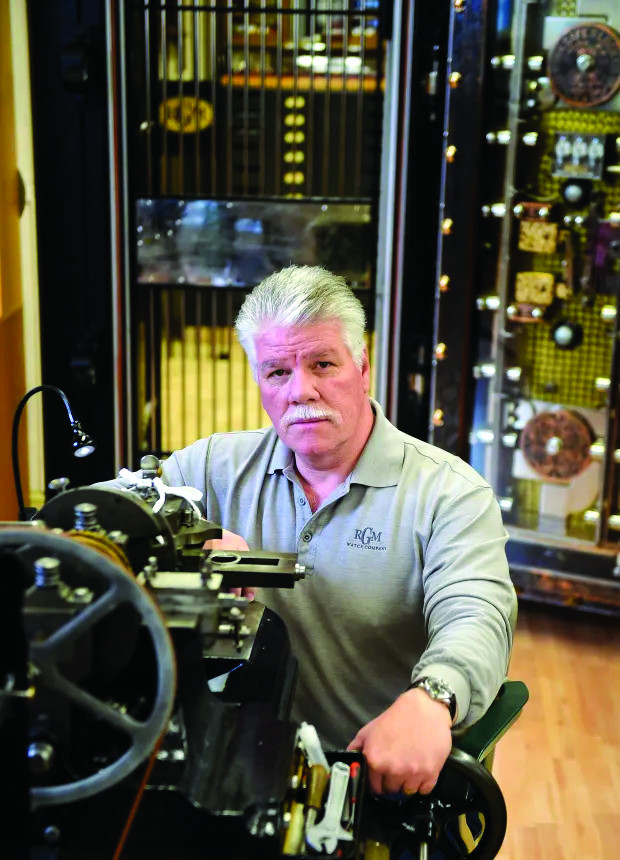
ROLAND G.
MURPHY
Founder
RGM Watch Company
What
first drew you to the world of watches and horology?
In high school, I worked part-time at a small factory that made
grandfather clocks. When the company went bankrupt, many of its components were
sold off, and my father and I purchased cabinets, movements, and other parts. I
began assembling the cabinets with German movements and selling the finished
clocks.
Soon, my curiosity shifted toward the mechanics themselves. I set up
a movement on a table with a hole for the weights to drop through so I could
watch it operate. Eventually, I took one apart and reassembled it and when it
worked, I was completely hooked.
A friend told us about Bowman Technical School in Lancaster, Pennsylvania, where I formally studied clockmaking and watchmaking. Later, I attended WOSTEP in Neuchâtel, Switzerland, in 1986. Afterward, I returned to Lancaster to work for SMH (now Swatch Group) in product development for the Hamilton brand. Five years later, in 1992, I founded RGM with the goal of creating fine mechanical watches in America once again.
Was
there a mentor or role model who inspired your journey in horology?
I’ve been fortunate to have many friends and peers in the
independent watchmaking world who have inspired and supported me over the
years. It’s difficult to name just one without leaving someone out.
When I began, my only goal was to make a living doing what I love
making and repairing watches. I’ve been fortunate to achieve that, and that in
itself continues to inspire me.
How
did your time at Bowman Technical School and WOSTEP shape your perspective on
watchmaking?
Those years were foundational. That’s where I developed a deep love for watchmaking, its traditions, and the history of great watch companies. I also learned the core skills of repairing watches, fabricating parts, and mastering micro-mechanics — all of which continue to influence how we work at RGM today.
Looking
back, what was the biggest lesson from your early years in the industry?
Understanding how the entire industry functions from design and sourcing to manufacturing and selling was invaluable. Those early lessons taught me the importance of both craftsmanship and business sense.
What
motivated you to start RGM in 1992, especially when American watchmaking was
less prominent?
I wanted the creative freedom to make watches the way I envisioned
them without the limitations that often come with working for a large company.
Starting RGM allowed me to pursue watchmaking on my own terms.
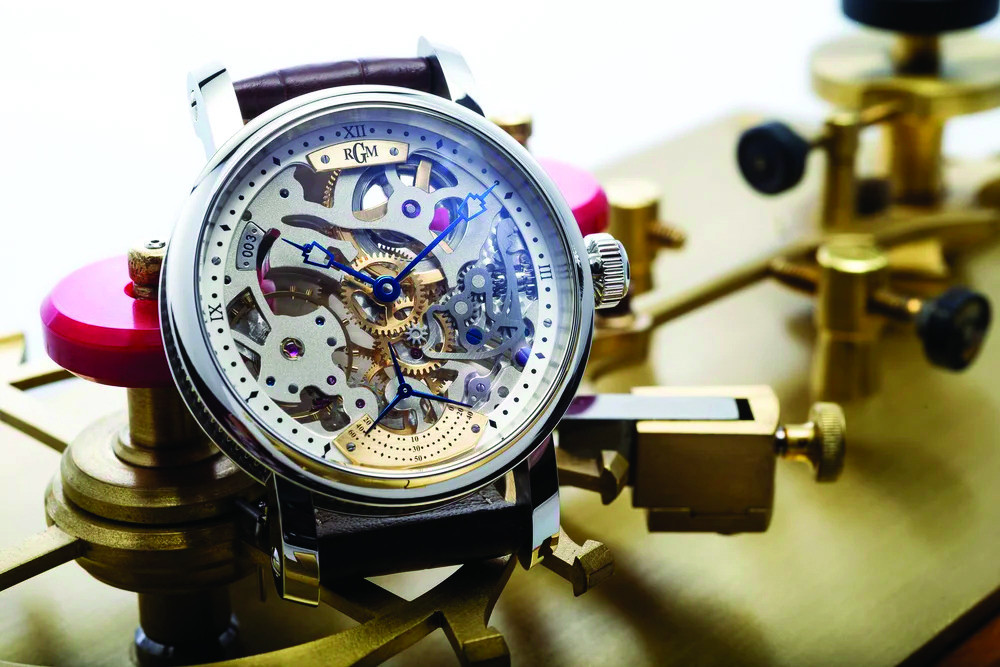
RGM
is known for producing in-house movements, dials, and cases. How did you
overcome the challenges of vertical integration?
Bringing movement manufacturing back to the U.S. even on a small
scale was a major challenge. Being far from the modern watchmaking center of
Switzerland made it an uphill battle, but I was determined to create our own
in-house movement.
Persistence and time were the keys. As a watchmaker and lover of the craft, I couldn’t imagine being satisfied without achieving that goal.
Which
RGM model are you most proud of creating, and why?
It’s always the watch in my head the one that’s fully realized in my imagination but hasn’t yet come to life. That pursuit of what’s next keeps the passion alive.
How
do you balance modern technology with traditional handcrafting techniques in
your watches?
We use modern technology selectively mainly for producing certain raw movement components. But by far, most of the work is still done by hand. Traditional craftsmanship remains at the heart of what we do.
Your
philosophy emphasizes creating watches, not just assembling them. How does that
shape RGM’s culture?
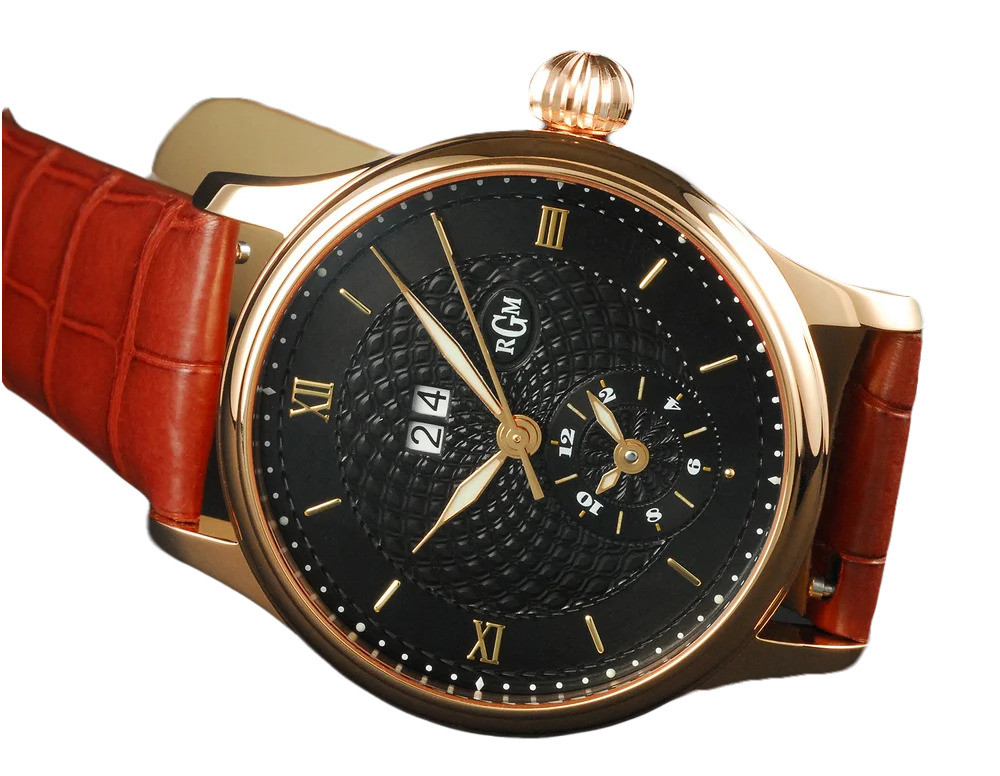
Our focus is always on true watchmaking. Everything else takes a back seat to that. There’s no “faux” watchmaking at RGM every process follows genuine, time-honored methods.
When
designing a watch, what is your starting point mechanical innovation,
aesthetics, or heritage?
It always begins with an idea something classic and timeless. We don’t follow trends. Each design reflects my own sense of what a watch should be, grounded in tradition but built to endure.
How
do you approach the balance between functionality and artistry in RGM watches?
For us, functionality and artistry go hand in hand. It’s not something we consciously balance it’s simply part of our natural approach to design and craftsmanship.
What
do you see as the future of American watchmaking in the global industry?
More brands will continue to sell directly to customers online. We’ll see increasing use of new materials and technologies some beneficial, others perhaps less so. And, I hope to see a renewed appreciation for classic, traditional watchmaking.
What
advice would you give to young watchmakers who aspire to create their own
brand?
Never let anyone discourage you from following your dream. But
understand that it takes hard work, determination, endurance, and the ability
to overcome setbacks.
Learn from your mistakes those lessons are often the most valuable. And above all, do what you love. You’ll never excel at something you’re not passionate about.
How
do collectors and enthusiasts influence your design choices or innovations?
Collectors mainly influence size preferences, but stylistically, those who find RGM usually do so because they already appreciate our classic aesthetic. We create for people who share that same appreciation for traditional design.
Are
there any particular collaborations, partnerships, or commissions that have had
a lasting impact on RGM?
Yes, our three collaborations with Martin Guitar, right here in Pennsylvania, have been especially meaningful. Those projects beautifully combined craftsmanship from two traditional arts watchmaking and instrument making.
How
do you ensure that each RGM watch tells a story beyond just keeping time?
Every RGM watch tells a story of craftsmanship, inspiration, and my
personal love for horology. Each piece embodies the tradition, dedication, and
artistry that define true American watchmaking.