

BELAL SHAHER
Founder & CEO, GRANDEUR USA
In a watch industry dominated by century-old European maisons, a young American boutique-brand is breaking every convention technically, artistically, and commercially. Grandeur Watches, led by its visionary CEO, Mr. Belal Shaher has stunned the global horological community with world-first innovations: a lume tourbillon, a glow-in-the-dark fully ceramic watch, in-house complications built from scratch, and disruptive pricing that challenges Swiss luxury at its core.
In this exclusive conversation, Watch Circle Magazine sits down with the CEO of Grandeur Watches to discuss the origins of his brand, his bold engineering philosophy, and the remarkable journey of building one of the world’s fastest-rising independent watch companies.
Sir, to begin with—how did your journey into watchmaking start? What inspired the idea of launching your own brand?
My journey started very organically. I have always been a watch lover. By the time I started my own brand, I already had an USD 8 million personal collection rare Richard Mille pieces, one-of-one Rolexes, extremely unique limited editions. Despite having many successful businesses, I felt none of them carried a legacy. Watches, to me, represented art, engineering, passion, and permanence.
One day I told my wife about my passion to create my own watch brand. She immediately said, “My uncle is a watchmaker. You two should meet.” That conversation changed everything. I flew to China, met her uncle who owns a movement manufacturing facility in China and we discussed my vision. From there, we created my first watch, inspired by Patek Philippe Nautilus, using a Miyota movement. Surprisingly, the watch was a huge commercial success. That success gave me confidence that the market wanted something fresh, bold, and affordable.
When did Grandeur Watches transition from simple designs to high complications?
In the early years, Grandeur Watches was focused on mastering the fundamentals—design language, case construction, basic manufacturing, and building a recognizable product identity. Those first two years were essential learning years, where every model helped us understand our customers and refine our craft. But once we realized that collectors genuinely trusted us and were willing to support our creative direction, I knew it was time to push the boundaries. Around 2019, after five years in the industry, I formed our first dedicated R&D team. It included two highly skilled German engineers and a group of experienced Chinese watchmakers and technicians. The mission I gave them was ambitious yet simple: “Let’s create true complications, in-house.”
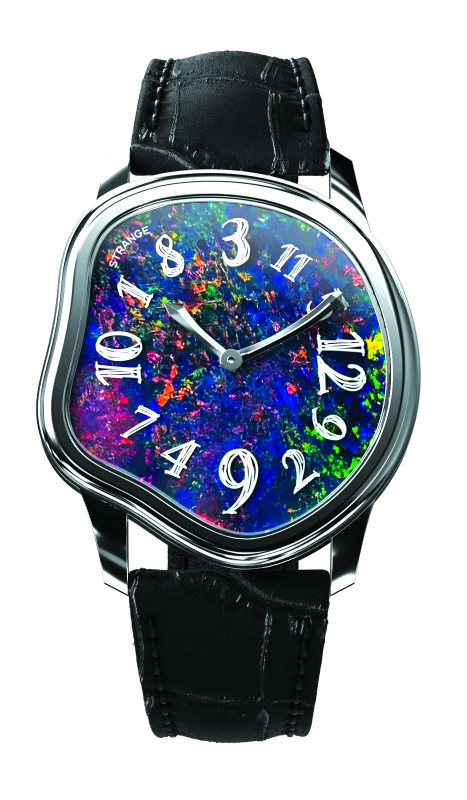
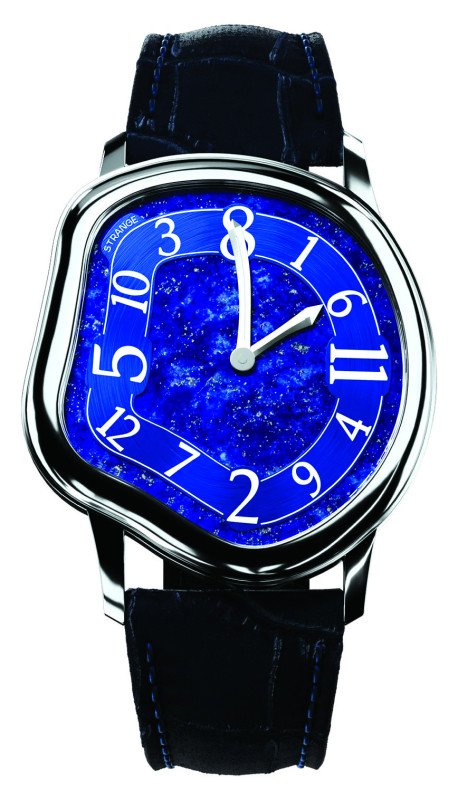
What followed was three years of relentless experimentation, prototyping, and problem-solving until we finally unveiled our first in-house movement the Strange Movement. This movement powered our “Strange” collection, featuring a bold zigzag jumping hour complication that immediately caught the attention of collectors worldwide. That watch became a defining moment for us, proving that Grandeur could move beyond simple designs and establish itself as a serious innovator in modern horology.
There has been a lot of discussion about “in-house.” Are your movements truly in-house?
When I use the term “in-house,” I mean exactly that developed, engineered, and constructed by our own team. In some models, we do start with a reliable base movement from Hangzhou or ETA, but everything that defines the watch the complication, the architecture, the mechanical behavior, the regulation system is built exclusively for Grandeur. For example, the Lume Tourbillon begins with a Hangzhou base, but the tourbillon itself is entirely re-engineered by us. We redesigned the tourbillon cage, rebalanced the system, and rebuilt the entire mechanism so it could support our luminous construction. The Strange movement, on the other hand, is a fully in-house creation from the ground up, showcasing our ability to design a unique complication without depending on any external blueprint. And with the new Crescendo, we designed our own mechanical repeater module on top of the ETA 6497, chosen specifically for its long-term serviceability.
So when I say our movements are in-house, it means they are either fully created by us or built using a base that we transform so extensively that it exists exclusively for Grandeur. Many of the parts used are unique to this movement
You mentioned the Lume Tourbillon one of your most famous creations. How did that innovation happen?
The Lume Tourbillon began as a personal challenge. I wanted to take a traditional complication something the industry considers sacred and elevate it to a realm no one had ever attempted. That idea led to the world’s first full Lume Tourbillon, a concept that demanded both creativity and mechanical courage. But the real challenge wasn’t the aesthetics it was physics. The moment you apply lume to a balance wheel, you disrupt its perfect weight distribution. Even a microscopic imbalance can destabilize the tourbillon, causing irregular timing and mechanical failure.
It took me nearly two years of experimentation, rebuilding, rebalancing, and regulating the mechanism until we achieved flawless stability with lume applied. But once the engineering puzzle was solved, the result was extraordinary: a glowing, fully functional tourbillon unlike anything the industry had seen. When we launched the piece, all 100 units sold out within three hours. That overwhelming response confirmed something important the world was ready for innovation that dared to break tradition while still respecting the craft.
Another milestone is your glow-in-the-dark ceramic watches. What inspired that development?
Honestly curiosity and money. [laughs] I remember seeing IWC’s prototype of a luminous ceramic years ago. It looked incredible, but they never released it commercially. That immediately sparked something in me. I thought, “If they can prototype it, why can’t I push it all the way to production?” That question became an obsession, and I invested heavily into material research.
Other had done low temperature resign glow watches. Ceramic is already one of the most difficult materials to shape and finish in watchmaking due to this high heat required. Getting it to glow evenly is something else entirely. The pigments behave unpredictably, the firing temperatures have to be exact, and even the smallest inconsistency ruins the entire batch. We went through countless experiments, testing different formulations and firing methods until we finally achieved a stable, bright, fully luminous ceramic.
The result was the Strange Ceramic, the world’s first fully glowing ceramic watch case made available to the public—not just as a prototype, but as a finished product that collectors could actually own. And we delivered every single piece exactly as promised. The reactions were overwhelming; people had never seen anything like it. It proved once again that innovation doesn’t always come from the biggest names—it comes from those willing to take risks.
Your brand seems to specialize in limited pieces. Why only 100 units each?
Because for me, the heart of Grandeur Watches is innovation—not mass production. If my factories became tied up producing thousands of units of a single model, I would lose the freedom to experiment, design, and develop the next generation of complications. I’m not trying to become a mainstream, high-volume brand. I want to release multiple original ideas every year—new movements, new materials, new complications.
Limiting each edition to under 100 pieces strikes the perfect balance. It keeps the watches exclusive and collectible, while giving me enough capacity and flexibility to continue pushing boundaries. The moment a brand becomes a production machine, creativity slows down. For Grandeur, staying small in quantity allows us to stay big in innovation.
Let’s talk about the Revolve model. What makes it so unique?
Revolve is one of those creations where we deliberately stepped outside traditional watchmaking boundaries. It features a five-minute satellite wandering hour complication, a display rarely seen in the industry and almost never at an accessible price point. The base is a reliable Miyota 9039, but the real magic lies in the custom module we engineered on top of it. Every rotating satellite, every mechanical interaction, every transition from one minute segment to the next was designed by our team from the ground up.
The focus was never the base movement—it was the module, the choreography, and the visual experience. Building a complication that moves gracefully, remains accurate, and maintains structural stability was a massive engineering challenge, but it resulted in a watch that feels like a mechanical sculpture on the wrist. We are delivering the first 100 pieces this month, and I can say with complete honesty that Revolve is one of the creations I’m most proud of. It embodies exactly what Grandeur stands for: bold concepts, technical originality, and fearless execution.
TORQ Mechanical has also made headlines, what makes TORQ special?
TORQ is my personal tribute to the Richard Mille RM62—my all-time favorite watch. What fascinated me about the RM62 was its ultra-thin engineering and incredibly lightweight construction, something very few brands have attempted at that level. So I set myself a challenge: Could we replicate the thinness, match the weight, engineer our own module, and still make it affordable for all collectors around the world? That became the foundation of TORQ.
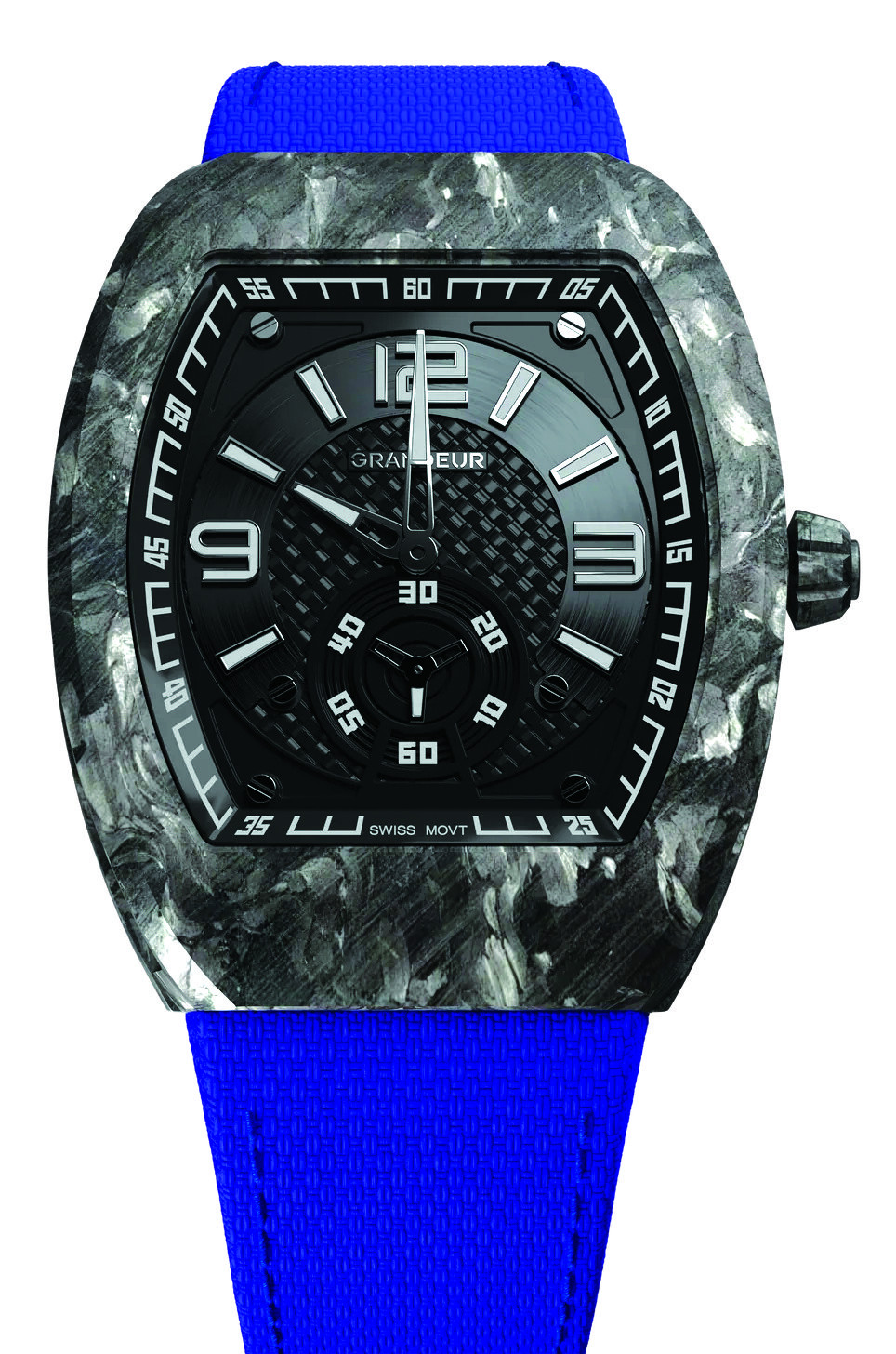
We aimed for extreme specifications—7mm thickness, 32 grams total weight, and a sleek architectural case that feels almost weightless on the wrist. We introduced variants in sapphire, ceramic, titanium, and carbon, each requiring a completely different production process and structural approach. Inside, we used a custom movement produced exclusively for us by Hangzhou, tailored to our dimensions and functional requirements.
Collectors immediately understood what we were trying to achieve. Many told us they never imagined a watch with RM-style engineering principles could be priced under $5,000. The response proved them wrong. TORQ’s Kickstarter campaign crossing $500,000 in just five days was more than a commercial success—it was a validation that high-concept, highly engineered watchmaking can be accessible without compromising on ambition. TORQ wasn’t just another model for us; it was a breakthrough moment that redefined what an independent brand could deliver.
How are you able to do so many innovations in such a short time?
People often ask me how Grandeur Watches is able to produce so many groundbreaking innovations in such a short span. The answer is surprisingly simple: I have the financial freedom to reinvest aggressively into every new idea. Whenever inspiration strikes, I immediately fund research and development without hesitation or delay. I don’t rely on outside investors or external approvals—my personal passion drives every decision, every experiment, and every creation.
This freedom allows us to explore uncharted territories: experimenting with new materials, developing never-before-seen complications, designing custom movements, exploring artistic hand engraving, pushing the limits of ceramic technology, and perfecting handmade finishing techniques. Essentially, every creative impulse can be immediately translated into a tangible prototype, and that agility is what lets Grandeur consistently stay ahead of the curve in independent watchmaking.
Speaking of finishing—you are now developing high-end hand-finished watches in the USA. Tell us about the Miami factory.
The Miami factory represents a major milestone for Grandeur Watches and is scheduled to open in early 2026. Unlike our existing facilities, this location is dedicated entirely to hand craftsmanship and ultra-premium horology. The focus will be on hand engraving, hand-finished movements, hand-painted enamel dials, and the creation of high-end complications that rival the finest Swiss manufacturers.
Because every component is meticulously crafted by hand, production will be deliberately limited to around 70–90 movements per year. This is not about mass production—it’s about artistry, precision, and pushing the boundaries of what can be achieved outside of Switzerland. My goal is to show the world that the USA can produce not just functional timepieces, but artistic horology capable of standing alongside traditional high-end watchmaking.
You showed us examples of your hand-engraved dials and movements. What was the vision behind introducing such artistic pieces?
Swiss watchmaking has always been revered for its artistry—the hand engraving, enamel work, and meticulous finishing that transform a timepiece into a work of art. I wanted Grandeur Watches to honor that tradition while making it more accessible to collectors who might not otherwise experience such craftsmanship.
Our vision led to the creation of enamel dials set with natural diamonds, deep hand engravings that tell personal stories, and fully hand-engraved bridges and plates. Every movement is finished with extraordinary attention to detail, merging engineering precision with visual artistry. These pieces demonstrate that technical mastery and artistic expression can coexist seamlessly—even within an American brand—and that horology can be both functional and emotionally compelling.
Many people question whether these innovations are real or deliverable. How do you respond to that?
(Laughs) I’ve heard it all—people calling me a scammer every time we announce something groundbreaking. They say things like: “He can’t deliver this,” “This is impossible at that price,” or “No microbrand can make this.” Honestly, I take it as part of the territory when you’re challenging conventions.
The proof, however, is in the delivery. I have successfully delivered every single product we’ve ever announced: the Strange collection, the Lume Tourbillon, the Ceramic Strange, TORQ Mechanical, and now Revolve is going out to collectors. Future releases are on schedule as well. Not a single customer has complained, and remarkably, hardly anyone resells their watches—they love them too much. That, to me, says everything about the integrity and quality of what we create. Our innovations are real, tangible, and fully deliverable—no hype, no shortcuts.
The USA is not traditionally known for watchmaking. Do you feel you are changing that?
I believe we are. Switzerland has produced incredible horology over the centuries, but the industry has also become synonymous with high markups. Watches, in my view, should be accessible to collectors without sacrificing innovation or quality. My challenge to the Swiss industry is straightforward: “If I can build these complications for a fraction of their price, why can’t you?”
Grandeur Watches is part of what I see as a new era in global watchmaking—one where groundbreaking design, technical mastery, and artistic finishing are no longer confined to Switzerland. I want our brand to represent that shift: proving that American watchmaking can not only compete with the best in the world but also make it accessible, daring, and innovative.
Finally, what is your long-term vision for Grandeur Watches?
My vision for Grandeur Watches is both ambitious and clear. I aim to build the most innovative watch brand outside of Switzerland, one that challenges traditional notions of pricing, design, and mechanical ingenuity. I want to democratize high complications, making extraordinary horology accessible to collectors who might never have dreamed of owning such pieces.
At the same time, I hope to establish the USA as a respected hub for watchmaking, demonstrating that world-class craftsmanship and artistic excellence are not limited by geography. We will continue to push the boundaries of materials, movements, and complications, experimenting with new technologies, hand-finishing techniques, and artistic expressions. Ultimately, my goal is to create true legacy pieces—watches that collectors cherish, pass down, and remember—not just for their mechanics, but for the vision, artistry, and daring that went into them. I firmly believe Grandeur Watches has already started changing the industry, and this is only the beginning.