
Roland Baptiste
Founder
RBAPTISTE WATCH
What first led
you to the world of engraving, and how did that journey evolve into creating
your own watch brand?
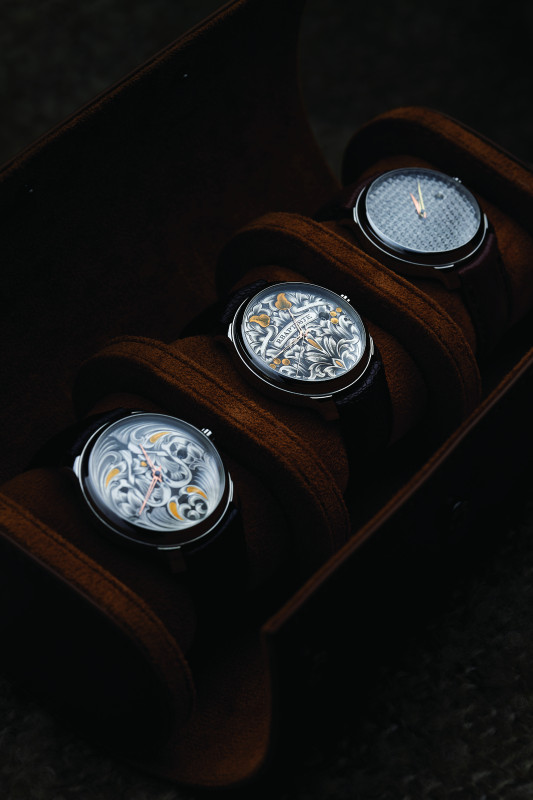
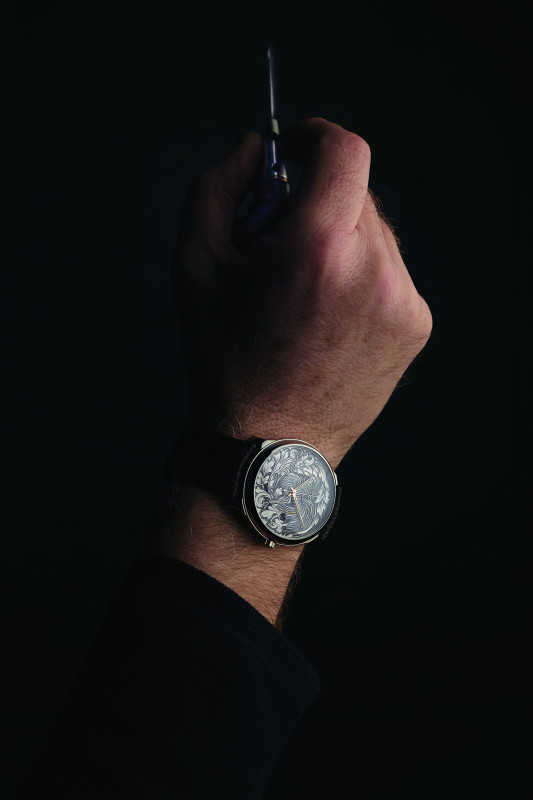
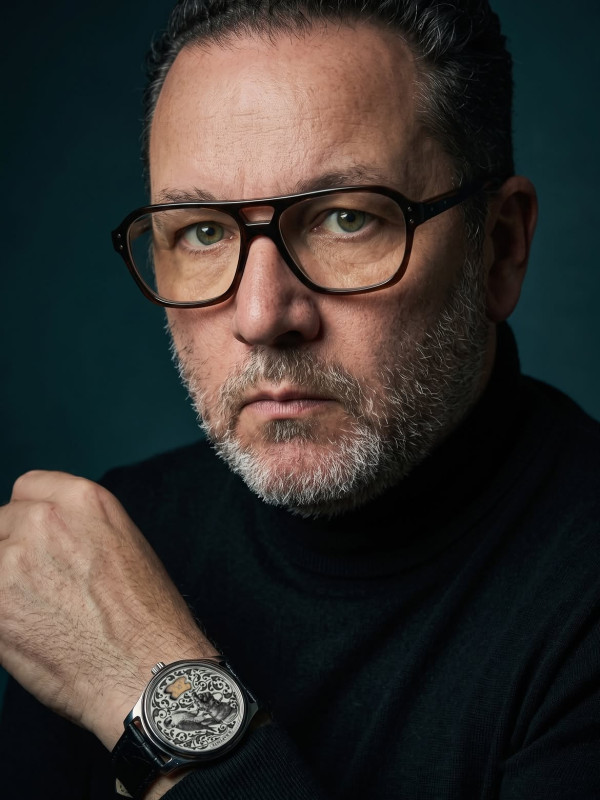
I am the son of an engraver, so the sound of the hammer and the chisel was the soundtrack of my childhood in Liège. It was quite natural for me to join the Liège Armoury School, from which I graduated in 1993. For more than twenty years, I worked on the embellishment of fine hunting weapons for prestigious armourers in Belgium and England. The evolution towards watchmaking was born from a desire for freedom. When you work for big luxury brands, you're often just one hand executing a design decided by someone else. I wanted to regain my creative expression. I realised that the precision required for fine weapons - the mechanics of steel - had a perfect parallel in watchmaking. I diwdn't just want to engrave watches; I wanted to build a brand where engraving would be the heart of design, and not an afterthought.
Do you remember
the moment you decided to merge traditional Belgian engraving with horology?
I remember
looking at the market and seeing the "perfection". The machines had
become so efficient that they could produce flawless engraving. But for me,
this perfection was cold; it lacked soul. I missed the smell of the workshop. I
realised that Liège has a centuries-old tradition of steel work, usually for
armoury.
I wanted to transpose this specific craft "Mosan" (from the Meuse valley) on a peaceful object. The transition was inspired by a challenge: could I apply the high-relief and sculpture techniques used on a rifle rocker with the much smaller and more delicate canvas of a watch case? That's what was the spark.
Where do the
patterns, motifs, and overall visual language of your engravings originate?
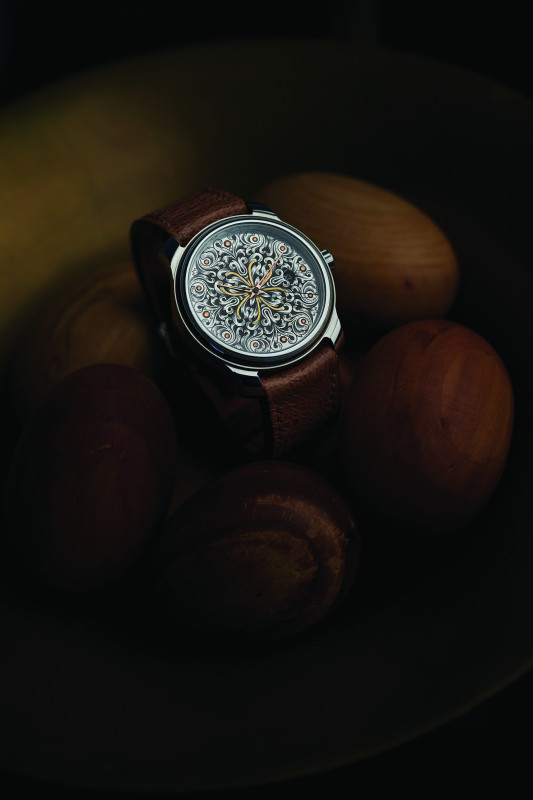
My visual language is deeply rooted in the Liège style of arms engraving - rich and intertwined rinses, deep reliefs and acanth leaves. It's the DNA of my region. However, I am also inspired by nature and Art Nouveau, which is very present in Belgian architecture. When I work on customised pieces, the motifs come from the client's life - his passions, whether it's hunting, history or personal symbols.
What movements
do you prefer to use in your watches, and what guides that choice?
I prefer robust Swiss-made automatic movements, often modified according to my specifications. For my Royal collection, for example, we changed the movement to display the time via a disc rather than hands, to leave more visual space for the art. The choice is guided by reliability. My clients buy a work of art, of course, but it must also be a functional instrument that can be maintained by any competent watchmaker in the future.
Do you
collaborate with external watchmakers or other artisans for certain components?
I am first and foremost a watchmaker and engraver, not a movement builder. Honesty is part of craftsmanship. Thus, I design the watches and realise all the engraving and finishes in my workshop in Verviers, but I collaborate with partners for the manufacture of raw cases (created here and manufactured by partners in Belgium) and the movements come from Switzerland. This partnership allows me to focus on where I bring the most value: the transformation of this steel into art.
RBaptiste is
known for one-of-a-kind creations. How do clients usually participate in your
customization process?
They are the co-authors. A customer can come to me with a vague idea or a specific theme. I translate their story into steel. We discuss the location of the engraving: the bezel, the sides of the case, the horns or even the dial. I also offer the customisation of existing watches from other brands, giving them a new identity. The client is involved in the approval of the sketches before I make the first notch.
How do you feel
your work continues or reinvents this long artistic tradition?
I consider myself a guardian of this know-how. The Liège tradition is likely to disappear because less work is required. By moving this art of weapons (which not everyone appreciates) to watches (which are universally loved accessories), I give technology a new support to survive in the modern world. I preserve the gesture, but I reinvent the application.
In your view,
what sets RBaptiste apart from other artisanal watch brands in today’s market?
This is the authenticity
of the "Hand". Many brands claim to do "handmade", but they
use lasers or CNC machines for 90% of the work and end up by hand. At
RBaptiste, the removal of material is carried out by the artist. My watches are
not just "decorated"; they are sculpted. You can feel the difference
with your nail - the sharpness of a hand-cut line and its reflection are
impossible to reproduce with a machine.
What is the
greatest challenge of creating fully hand-engraved timepieces in a automated
world?
The weather. The world wants everything for yesterday. My work requires a "slow luxury" approach. Educating the customer about the fact that he has to wait months for his piece is a challenge, but it is also a filter. Those who understand the value of craftsmanship are ready to wait. The other challenge is physical; engraving requires intense mental and visual discipline.
Do you feel that
collectors are rediscovering and valuing handcraftsmanship?
Absolutely. We are witnessing a reaction against the "soulless perfection" of industrial luxury. People are tired of having the same watch as everyone else. They want a connection with a human being, not a factory. They want to know that a specific person sat on a workbench and poured hours of his life into this object.
Would you
consider creating a museum-level “masterpiece” ?
"It's an absolute
dream, but you have to be realistic: such a project completely changes its
scale. We should target Haute Horlogerie, like a Tourbillon or a unique
complication. To create such a piece, I would necessarily have to partner with
a high-end movement manufacturer or an independent watchmaker capable of
modifying the architecture of the calibre so that it merges with my engraving
and my boxes. The challenge is therefore financial: the development and
acquisition of such movements require very large capital. For this masterpiece
to be created, it would be necessary to find passionate investors or patrons,
ready to finance this alliance between art mechanics and art engraving. ”