
Can you share your journey from architecture to watchmaking and what inspired you to found Holthinrichs Watches?
I have wanted to become an architect since I was eight. During my
holidays, I was always visiting castles and ruins in France. I became obsessed
with these structures and knew I wanted to do something with that. During my
studies in architecture, I specialized in such heritage and developed a
fascination for the romantic notion of transience and decay—the temporality of
human constructs and the beauty of their coexistence with nature. Nature brings
in new aesthetics, and ruins are only beautiful when the built object is of
high quality.
During my work at an architectural firm while studying, and during my master’s in Paris, I became more fascinated by Gothic architecture and Art Nouveau the innovative spirit in both styles, their separation from Classicism, and the craftsmanship and dedication deeply impressed me. I have a deep love for materials, their properties, patinas, detailing, etc.
What
first sparked your passion for watches, and how has it evolved over the years?
Through a roommate during my second year of studies, I discovered classic men's tailoring. I entered a rabbit hole, learned how to stitch, and bought a pocket watch from eBay. I didn’t know anything about it. It turned out to be an Omega from 1929. As soon as it arrived at my door and I opened the caseback, I was sold on mechanical watches. It had everything I loved about architecture: design, craftsmanship, technology, mechanics, etc.
When
did you realize watchmaking could become more than a passion and a lifelong
career?
I started collecting like a madman. I bought broken watches and
learned how to repair them during my evening hours alongside my studies. After
a few years, and some 300 watches later, I realized I was simply hoarding,
while I was trained to be a designer. I suddenly stopped buying and started
drawing in 2012. I reached out to manufacturers in Europe, and the quest began.
It started as a personal endeavour, but four years and many
prototypes later, it became serious. While I was graduating, my first client
found me and reached out to order a watch for his wedding. I finished it just
two days before the event and managed to successfully graduate as one of four
out of 18 people in the studio.
However, I also worked in practice and became disappointed by the current-day role of the architect in architectural practice. I want to fight for beauty, not fight just to be able to fight for it. In watches, I saw an alternative that combined all the elements I love about architecture.
What
were the biggest challenges in moving from architecture to launching an
independent watch brand?
I always joke: architects always go bankrupt because they don’t know anything about business! And I didn’t know anything about the market either. It was all driven by intuition. The business is now 10 years old, but nine of those ten years were very challenging, to say the least.
What
does “Architecture on the Wrist” mean to you?
I want people to experience the emotional sensations that architecture can evoke through its spatial, structural, and artisanal complexity. It has happened to me many times that I have been overwhelmed by an architectural artefact—that it hit me so hard that it made me cry. This is the power of art.
What
inspired you to embrace 3D-printed watch cases?
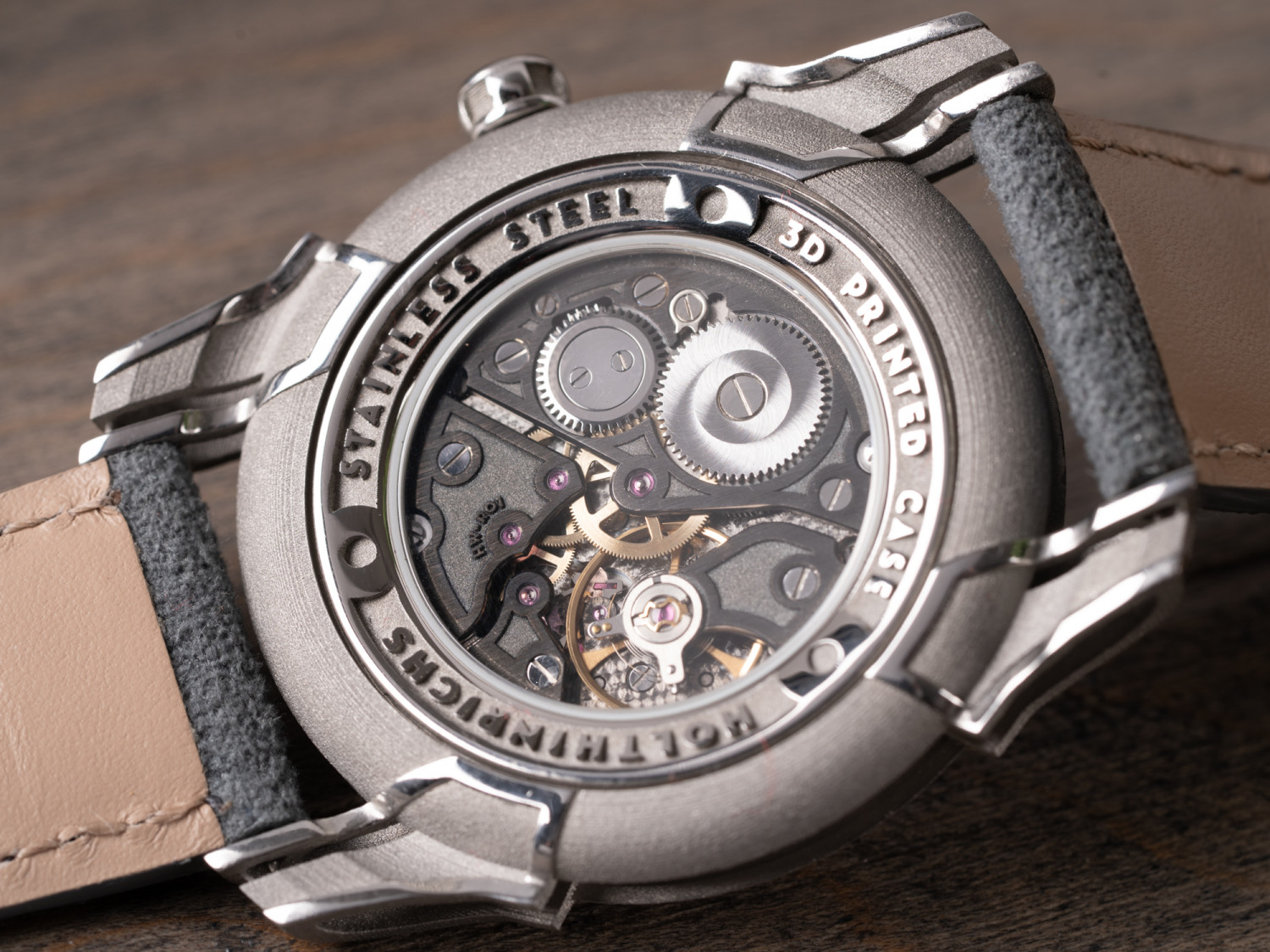
I was inspired to investigate the technique through my studies when we received our first plaster printer in the faculty. I saw ways of creating shapes that could not be realized using conventional methods.
What
challenges did you face in adopting this unconventional manufacturing method?
3D metal printing has all kinds of challenges and complications,
making it much harder to work with than any conventional technology. However,
the difference in design approach it provides, and the theoretical absence of
boundaries, make it a highly fascinating technology.
However, I advocate for smart design, respecting the boundary conditions of the technique and resulting in more organic and sculptural shapes. Just using the technology for its novelty properties, like adding a mesh structure to a conventional shape, is not what I consider smart design.
Which
Holthinrichs model best represents the brand, and what makes it special?
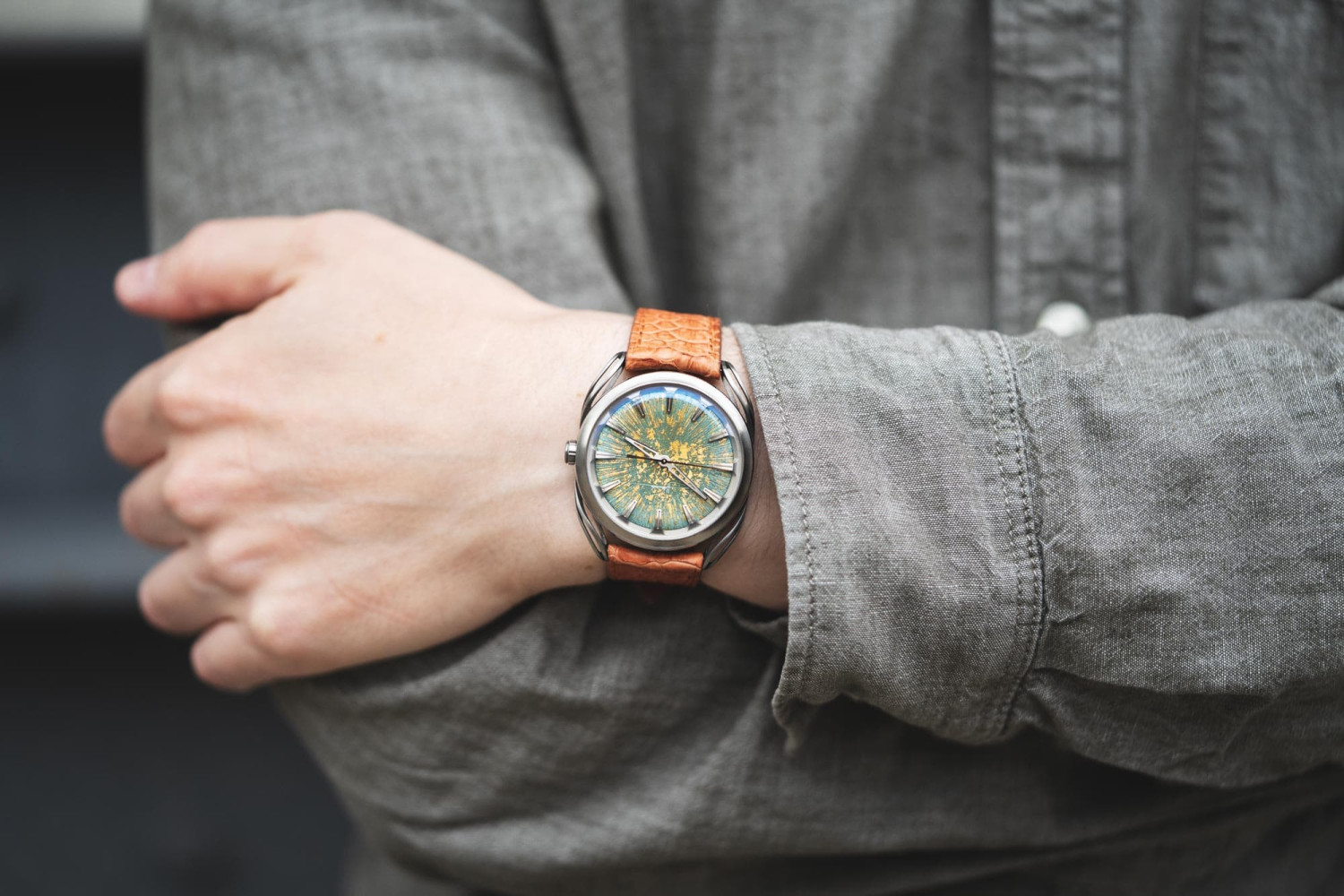
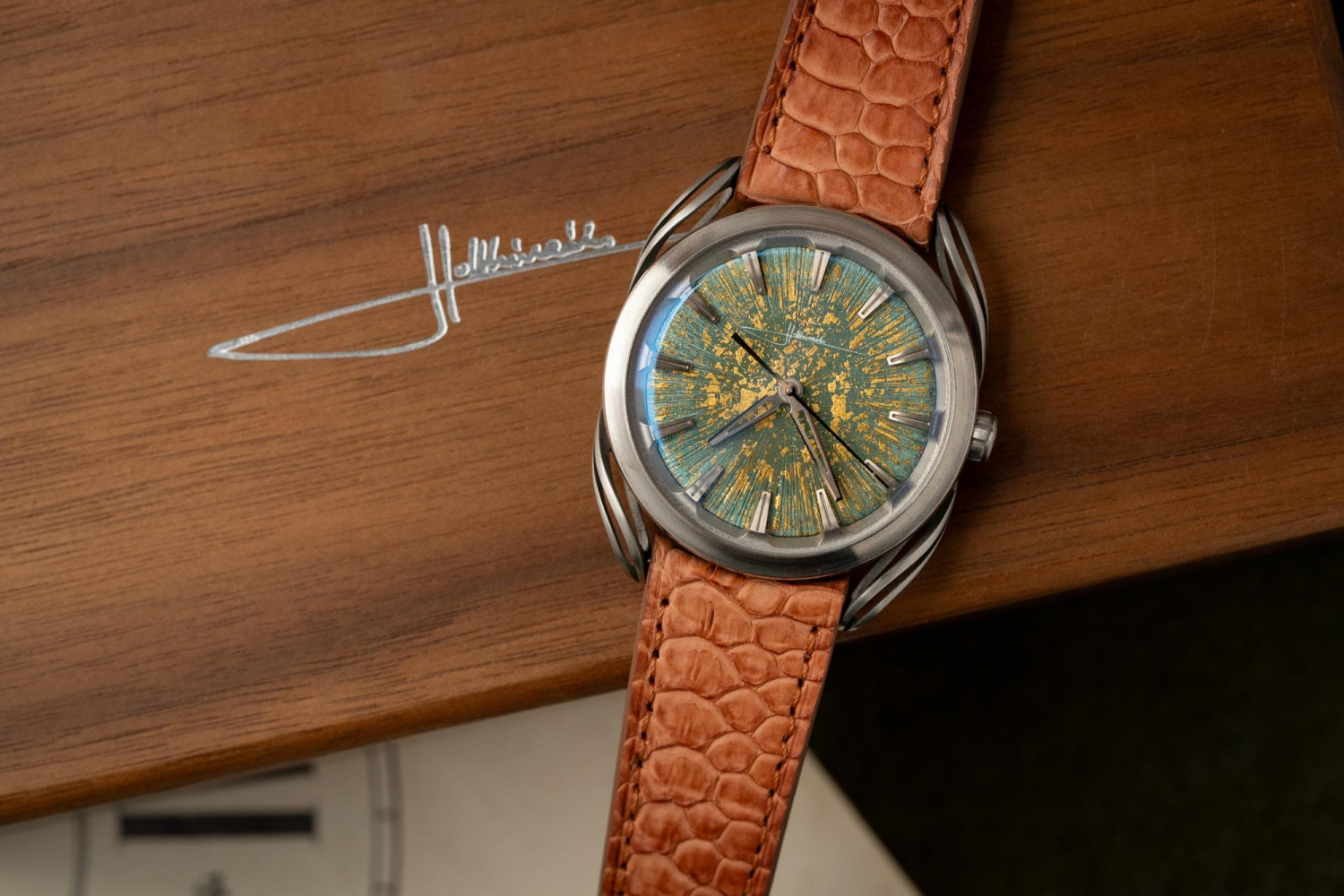
Ornament Nouveau. A design I started developing in 2017. It is the first embodiment of my dream for an integrated three-dimensional design. The case, movement, etc., all follow the same design language. Every component is considered an object of art. And it reminds me of the many things we can still develop!
How
do you view the future of independent watchmaking?
Interesting question. I tend not to look too much at what is being
launched because we can’t keep up with the market. I think the market has
shifted towards independents, and large brands are trying to incorporate that
spirit.
Which
international markets have responded most strongly to Holthinrichs Watches?
The USA, Middle East, and Southeast Asia are our strongest markets, with the USA currently in the lead. I think we are too new and different for Europe! Ha!
How
do you maintain exclusivity while growing the brand?
I am not sure if I understand the question correctly. But I think it is by staying true to myself and ourselves as a team. We focus on what we value, what our core aspects are, and avoid making compromises.
How
do you envision Holthinrichs Watches evolving over the next five years?
We are splitting our model lines into two brands. One will feature
our Signature Ornament and Signature Ornament LAB lines. These are about design
and material expression first. They are our most accessible models and are
meant to really spread brand awareness and our identity. Thinking about how to
build this brand is super exciting. We are currently developing new models
within those lines.
The second brand is our Haute Horlogerie branch. This is very much my personal expression of what design and watchmaking should look like. The intent is to think of concepts without boundary conditions.
What
upcoming projects or design concepts are you most excited about?
I cannot expose anything in detail. But our first manufacture is the
beginning of a wide spectrum of developments: technically, operationally, and
company-wise. This is only the beginning. But it is challenging, of course, at
the same time.
In the meantime, I will continue to investigate the development of the technologies and how they can help me realize amazing designs.
What
can collectors and enthusiasts look forward to from Holthinrichs Watches in the
near future?
Unfortunately, I cannot disclose much, but one thing is the launch
of the first publicly available Ornament Nouveau series in December this year.
It will have some very interesting innovative elements.
Finally,
what message would you like to share with Watch Circle Magazine readers
worldwide?
My parents taught me to always follow your heart and fight for what
you value. In my case, this is the concept of beauty. Beauty is a complex,
layered thing, which has a big impact on our wellbeing.
It is also something I believe we, as human beings, cannot fully
create on purpose. It might come from nature, or in some way, it needs to
co-work with the elements.
For me, striving for beauty is striving for
a better world and having an impact on people's lives. At the same time, I feel
that since it is sometimes impossible to plan or create, it inspires me to
always continue trying and improving. This makes it an everlasting endeavour,
something that fires me until I die.