

John
GLINISTER
Founder
Ember Watch Company
when considering materials, or specifying a part, I ask myself, “Am I making this decision based on what is expected and conventional, or is there an alternative that has not be considered?”. It is the same for my watches, and whilst the Rocket is fairly conventional in its use of materials and movement, this was out of necessity, as this was the first release, so cost was an important factor. However, my plans for future watches may consider alternative materials, unusual movements and complications, and unconventional manufacturing techniques.
What
inspired you to establish Ember Watch Company, and what gap in the watch
industry were you aiming to fill at the time?
I’ve always been a designer, and my career took me down the furniture path. However, I’ve always wanted to be able to design something from scratch, and own the whole creative process from start to finish, without external influence or control. I’ve also always had an interest in watches, specifically from a design perspective. However, it never occurred to me to combine these 2 things, until one day I was scrolling through my Instagram feed, and saw a post by another microbrand – one founded by someone I knew from university – and I thought, “why don’t I try that?”. Watches seemed like the perfect canvas to express my creativity, as well as a small business that I could fully manage individually. From that point on I became obsessed with learning how watches are made, researching suppliers and manufacturers, and trying to figure out how to launch an online ecommerce business.
Coming from
a background in bespoke furniture design and project management, how have those
experiences influenced your approach to watch design and brand development?
My
background is very technical – how furniture is made, what materials are used,
how it will be assembled and integrate into the fabric of a building. I’ve
spent years dealing with different suppliers and fabricators, resolving
technical challenges and coordinating numerous activities on large projects,
and of course all this experience has put my in a good position to manage my
own business and transfer these skills to the world of watch design and
production.
However, many aspects of running a watch company are entirely new to me, such as branding and marketing, and I’ve had to learn these skills as I go along.
Why did you
choose the name “Ember,” and what meaning or philosophy does it represent for
the company?
Deciding upon a name is probably one of the hardest things to do when starting a new company – most of the good ones are already taken! However, the word “Ember” has a nice sound to it, and I like the thought of an ember being what is left from a fire that has nearly gone out, but it can start a new one, which if fuelled correctly can grow and sustain itself. This makes a good analogy for my brand and the journey I am on.
Ember
watches carry a bold and distinctive modern identity. How would you describe
the core design language of the brand?
One of the
key aspects of the approach I have taken with the design language, is that I
have intentionally avoided referencing or being influenced by traditional or
conventional watch design. I have strived to approach the design of the watch
from a new perspective, and see the watch as a three-dimensional object, that
should provoke intrigue and joy from any angle it is viewed from. I design
watches with a style that excites me, rather than trying to anticipate what the
market might want. These are literally the watches I want, and I hope that
others share my taste.
Therefore, the design language that characterises Ember watches is one of unique individualism – striking, unconventional and thoroughly considered.
When
developing a new timepiece, how do you balance aesthetics, wearability, and
technical specifications?
My
starting point is always, “how do I want this watch to make me feel”. I see
this as more important than a list of specifications. I imagine the physical
form in my head, considering what shapes, angles, edges, and surfaces would
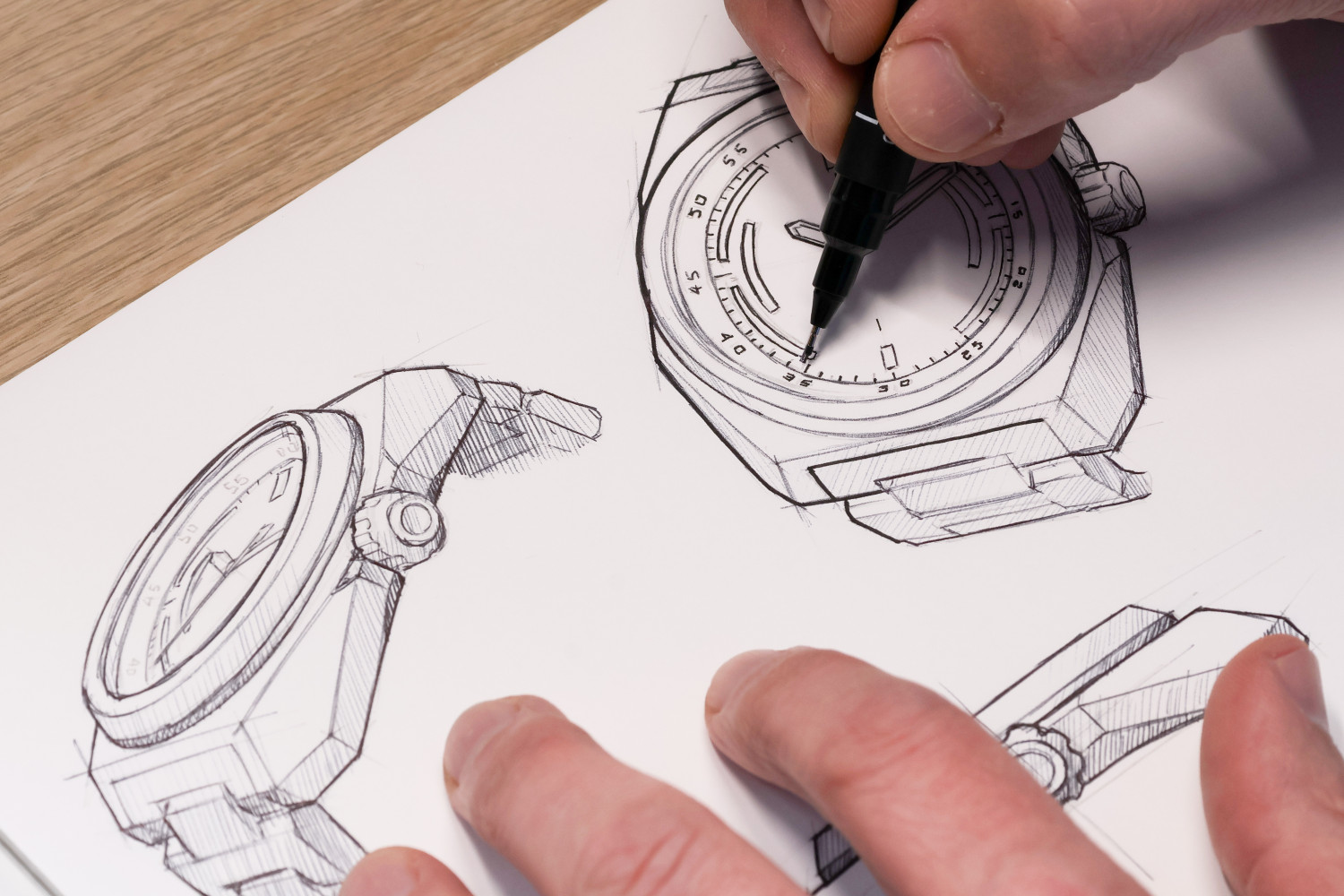
provoke the right emotions. Once the initial concept is sketched out on paper,
I start to consider the technical constraints and how these can be incorporated
into the design. The movement specification is obviously the most important
decision, as this can have the greatest impact on the design of the watch. Even
the crown position relative to the dial can have a big effect on proportions
that can upset the overall design.
Using 3D design software is essential for developing the case, but I never really know if the design works from a wearability perspective until it is 3D printed; only then can the proportions and dimensions be truly appreciated. Developing a new design from scratch typically requires 20-30 iterations of the 3D model, and dozens of 3D prints before I’m content with every aspect of the design.
Colours and
textures play a significant role in Ember’s collections. How important are
these elements in your creative process?
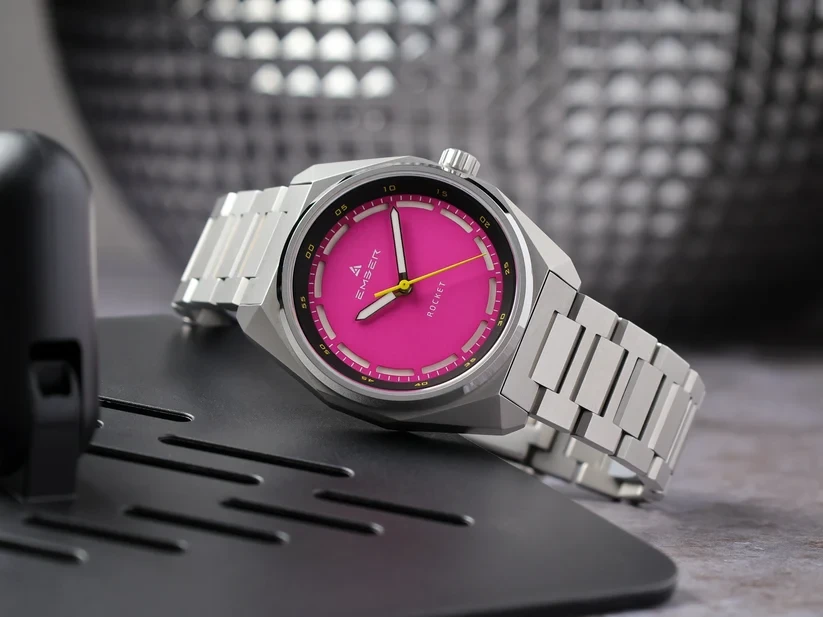
The choice and balance of colours and how they are used can dramatically change the look and feel of a watch. My watches are intended to evoke feelings of joy, intrigue and pleasure to the user, so vibrant colours and unexpected combinations play a big part in this. Most of my watches are very colourful, but even if I was to produce a watch with a toned down palette, it would still need a little pop of colour somewhere, I don’t think there will ever be a monotone Ember watch!
Within the
Rocket collection, are there any subtle design or engineering details that
enthusiasts may overlook but that you are especially proud of?
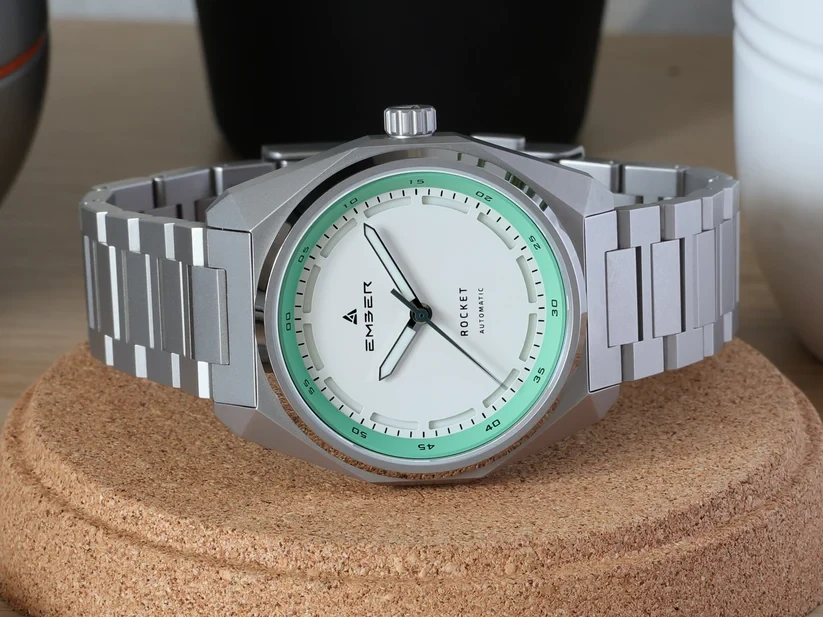
There are two details that I love demonstrating to people at watch shows – the first is the bottom layer of the sandwich dial in the Rocket, which is coated is SuperLuminova. People pick up the watch and they see the cutouts in the dial, but it’s when I shine a UV torch on it that their face really lights up (as well as the lume!). The second is the caseback, which features a repeating, geometric pattern, which is polished to contrast with the matte, bead-blasted case. Upon closer inspection, you will notice that this is in fact the Ember logo being repeated to create this pattern.
Following
the launch of your first collection, what feedback or reactions from collectors
surprised you the most?
I was actually
surprised by how positive some of the feedback was. Putting something out into
the world, something I had worked on in isolation for such a long time, is very
daunting. I had no idea how it would be received, so for total strangers to
come up to me and tell me they really like it, is such a privilege and I’m
always so grateful of any positive feedback I receive.
Crowdfunding
a first watch project can be both exciting and challenging. What were the
biggest lessons you learned from that experience?
Definitely that marketing is way more important than I had initially thought! On the run up to the Kickstarter launching, I should have made a much bigger effort with regards to setting up YouTube reviews, articles, sending out press-releases, and my own social media content. Through naivety I made the assumption that there would be a queue of people lining up to back my Kickstarter campaign, of course the reality was that I had to quickly organise more reviews to get the word out there. Fortunately, the campaign hit its target, but only just. That was certainly a learning experience.
What are the
most important factors you consider when selecting materials, movements, and
manufacturing partners for Ember watches?
I always try to question why every aspect of a product I am designing exists, and try to challenge my own expectations. Therefore, when considering materials, or specifying a part, I ask myself, “Am I making this decision based on what is expected and conventional, or is there an alternative that has not be considered?”. It is the same for my watches, and whilst the Rocket is fairly conventional in its use of materials and movement, this was out of necessity, as this was the first release, so cost was an important factor. However, my plans for future watches may consider alternative materials, unusual movements and complications, and unconventional manufacturing techniques. Not for the sake of it, but more as a result of looking at design from a different perspective.
Do you
believe today’s watch consumers are becoming more knowledgeable and
detail-oriented when it comes to watchmaking, specifications, and
craftsmanship?
Yes, certainly. Watch collectors are a very savvy bunch, and I think that results from the obsession to detail that most collectors embody. At every watch event I have attended, it is the enthusiasm that people bring that really stands out. There is also a huge amount of information easily available, thanks to YouTube and social media.
Looking back
on your journey so far, what has been the most rewarding moment since founding
Ember Watch Company?
This year
I exhibited at British Watchmakers Day for the first time. This was a very
successful day for the brand, and our special edition that was produced for the
show proved to be very popular. That day was certainly a highlight.
However, I would say that seeing a Rocket on someone’s wrist for the first time was probably the most rewarding moment for me personally.
What advice
would you give to aspiring entrepreneurs hoping to build their own independent
watch brand in today’s competitive industry?
Make sure
you are bringing something new to the table. That can mean a new design
language, a new approach to production, or even a new story. It’s a saturated
market, and buyers are spoilt for choice, so just a decent spec sheet won’t cut
it anymore.
Also, talk to the community. Talk to other brand owners. A great part of owning a brand for me has been the relationships I have established along the way. New friends and connections that have made this journey such a pleasure.
Finally, if
you had to describe Ember Watch Company in just three words, what would they
be?
Unconventional,
considered, individual.