
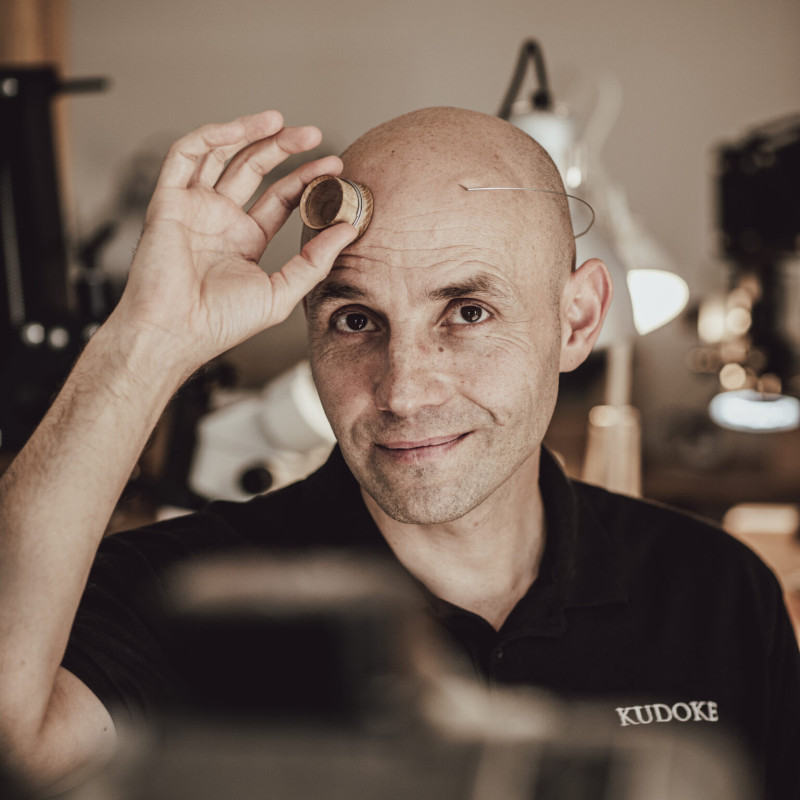
Stefan Kudoke is a German Master Watchmaker and the Founder of KUDOKE GmbH, an independent watchmaking atelier renowned for its handcrafted timepieces and traditional finishing techniques. Established in 2004, KUDOKE reflects Stefan's lifelong dedication to horology, combining classical craftsmanship with distinctive contemporary design.
A Certified Master
Watchmaker (Uhrmachermeister), Stefan also studied Business Administration with
a focus on economics and marketing. Before founding his own company, he honed
his expertise at some of the world's most prestigious Swiss and German watch
manufacturers, including Glashütte Original, Breguet, Blancpain, and Omega.
These experiences provided him with a deep understanding of both technical
excellence and fine watchmaking traditions.
Stefan's passion for
horology emerged during his watchmaking apprenticeship while restoring antique
pocket watches and large clocks. Fascinated by the intricate blend of
precision, craftsmanship, and history within each mechanism, he dedicated his
career to creating timepieces that celebrate the artistry of mechanical
watchmaking.
Today, Stefan personally oversees every aspect of KUDOKE, from movement construction and watch design to hand engraving, product development, quality control, and the company's long-term creative direction. Although his first watch was a Mühle Glashütte, he now wears one of his own creations most often the KUDOKE 2. His work continues to earn international recognition for preserving traditional handcraft while pushing the boundaries of independent haute horlogerie.
How did those experiences shape your
philosophy as an independent watchmaker?
Working for renowned
manufactures gave me the opportunity to learn from some of the best in the
industry. I gained a deep appreciation for technical precision, quality, and
the discipline required to create exceptional watches.
At the same time, those
experiences helped me understand what I wanted to do differently. I realized
that I wanted to create watches with a stronger personal identity watches that
reflect the vision and craftsmanship of an individual rather than the strategy
of a large organization.
When I founded KUDOKE, I combined the high standards I had learned during those years with the creative freedom of an independent watchmaker. That balance between technical excellence and personal expression still defines my philosophy today.
What inspired you to establish KUDOKE,
and what vision did you have for the brand from the very beginning?
From the very beginning, my
vision was not to build the biggest company, but to build one with a clear
identity. I wanted KUDOKE to stand for authentic craftsmanship, distinctive
design, and genuine handwork. Every watch should carry the signature of the
people who made it and create an emotional connection with the person who wears
it.
That vision has remained
unchanged to this day.
How would you define the brand's
identity today?
I would define KUDOKE as an
independent manufacture where traditional craftsmanship, a strong design
identity, and a genuine human touch come together.
Every KUDOKE watch is
designed and built with the intention of creating something lasting—not only in
terms of quality, but also emotionally. Hand engraving, hand-finishing, and the
countless hours of work invested in every detail are not decorative features;
they are part of our identity and reflect the people behind each watch.
Perhaps most importantly, KUDOKE stands for authenticity. We don't follow trends or try to be everything to everyone. We create the watches we believe in, and I think collectors appreciate that honesty.
Why is preserving these traditional
techniques so important to you?
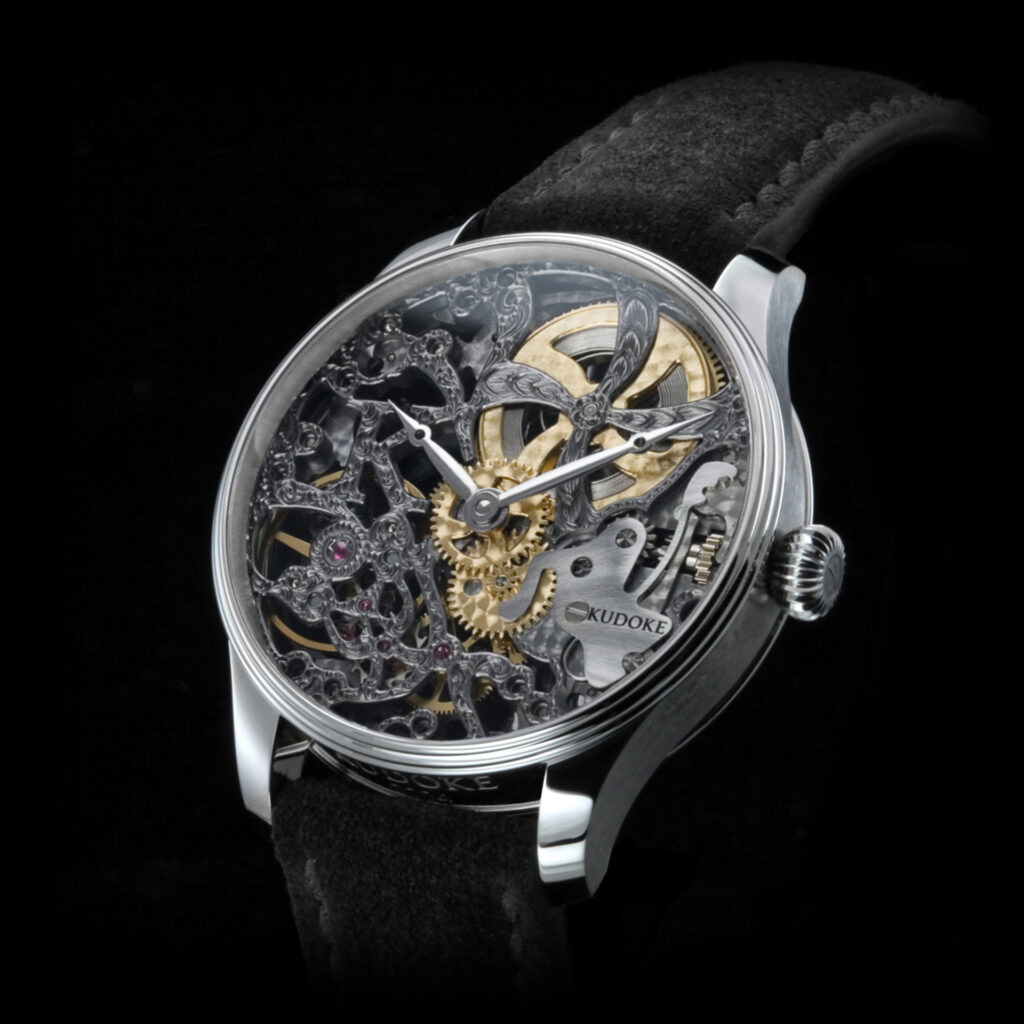
For me, hand engraving and
traditional finishing are much more than decorative techniques. They give every
watch its own character and create the human touch that no machine can truly
reproduce. Preserving these skills is also a way of preserving knowledge that
has been passed down through generations of watchmakers and engravers. I
believe it is our responsibility not only to use these techniques, but also to
keep them alive for the future.
Most importantly, hand craftsmanship creates an emotional connection. When a collector looks at one of our watches, I want them to see and feel that it was made by human hands, with patience, dedication, and respect for the craft.
What challenges did you face in
creating your own movement?
The biggest challenge was to develop a distinctive feature in the design of the movement. The movement and the design language were meant to be something unique and not comparable within the watch market especially not comparable to traditional German movement design. From this, the typical Kudoke design emerged, which is inspired by old English and German pocket watches and is now so distinctive.
What inspired HANDwerk collection, and
how has it evolved over the years?
I focused on skeleton
watches for many years and really explored and expressed my design language
within that field. However, after some time I reached a point where I
experienced a kind of creative block. That was the moment when I felt the need
to design something completely different from skeletonized watches.
So I started from scratch
and developed the new “Handwerk” collection. It was deliberately conceived as a
contrast to the elaborate skeleton watches. There were not many external
inspirations for it—the guiding principle was simply to make the design as pure
and minimal as possible.
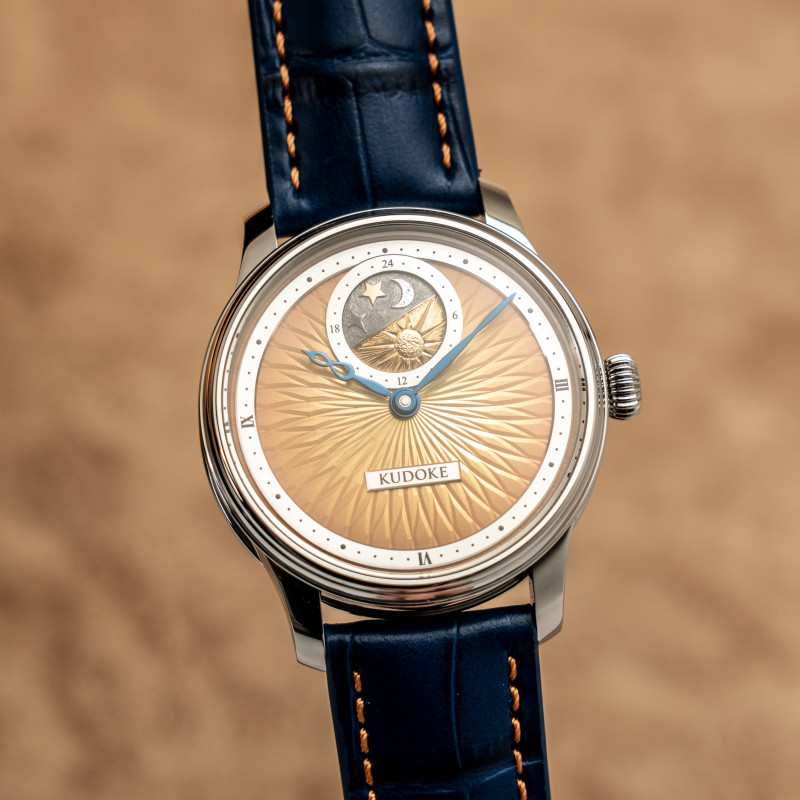
Over the years, different
models have been added to the collection, and we have also increasingly tried
to incorporate traditional craftsmanship techniques. Across all models, I aim
to maintain a consistent design signature, almost like a DNA that runs through
everything we create. This starts with our distinctive hour hand featuring the
infinity symbol and continues through to the engravings and finishing details.
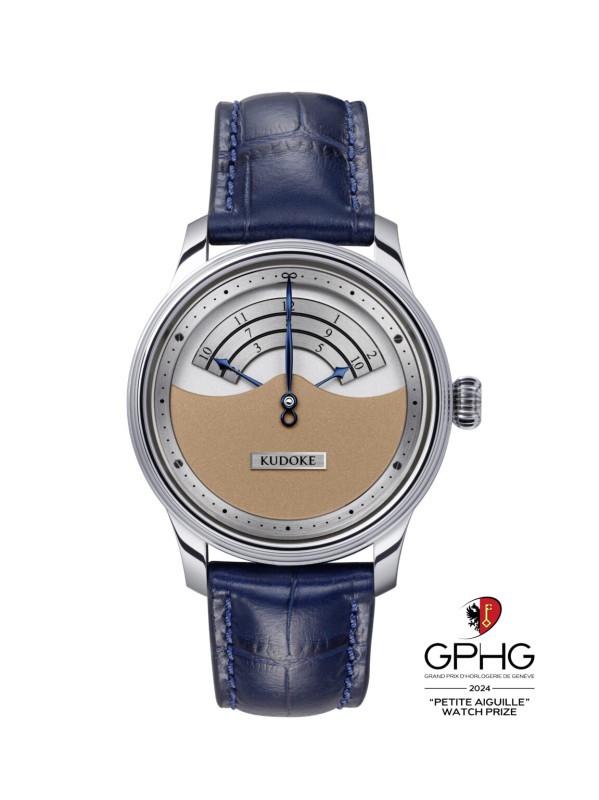
Winning the GPHG Petite Aiguille Award
for the KUDOKE 2 in 2019 was a landmark achievement. What did that recognition
mean to you personally?
Winning the GPHG Petite
Aiguille Award was, of course, a very special moment. It was a great honor to
receive such recognition from the watchmaking community and a confirmation that
our independent approach was appreciated internationally.
On a personal level,
however, I saw the award less as an achievement for myself and more as a
recognition of everyone who had contributed to KUDOKE over the years. Building
an independent manufacture is never the work of one person alone.
Perhaps the greatest value of the award was the visibility it brought. It introduced KUDOKE to collectors around the world and opened many new doors. But it did not change our philosophy. The next morning, we went back to the workshop and continued making watches with the same passion and attention to detail as before.
How do you balance artistic creativity
with technical precision when designing a new watch?
For me, every new watch
begins with an idea or an emotion rather than a technical specification. I
first think about what I want the watch to express and how it should make
people feel. Only then do I start looking for the technical solution.
At the same time,
creativity and engineering cannot exist independently in watchmaking. A
beautiful idea only becomes a successful watch if it is technically sound,
reliable, and functional. Very often, the technical challenge even improves the
original concept, leading to a better overall result.
In the end, I don't see artistic creativity and technical precision as opposites. They complement each other, and the best watches are created when both are in perfect balance.
As an independent watchmaker, what
advantages do you have over larger luxury brands?
Being independent gives us
the freedom to be flexible and courageous. We can make decisions quickly,
explore unconventional ideas, and take creative risks without having to
convince layers of management or follow short-term market expectations.
It also allows us to stay
close to our collectors. We listen, we learn, and we can respond personally.
That direct relationship often inspires new ideas and creates watches with a
much deeper meaning for both sides.
Finally, being independent
allows us to stay authentic. Every KUDOKE watch reflects our own vision and
craftsmanship. I believe collectors can feel that there are real people behind
every watch, and that human connection is something that cannot be scaled.
Can you share any upcoming movements,
complications, or new projects in development?
We are constantly working on new ideas, models, and limited editions. However, I don’t like to talk about things that are not yet finished. In due course, we will present our new releases. Stay tuned.
How do you see German independent
watchmaking evolving over the next decade?
I see independent German
watchmaking developing well, but also facing challenges over the next ten
years. Demand for true craftsmanship, clear identity, and transparent
production will continue to grow – and that is a major opportunity for
independent ateliers.
At the same time,
specialization will become increasingly important: not doing everything, but
consistently following a distinct creative signature. Traditional techniques
such as engraving and finishing must also be actively preserved and passed on.
Overall,
I am optimistic that independent German watchmakers will gain greater
international visibility – not through scale, but through character and
authenticity.