
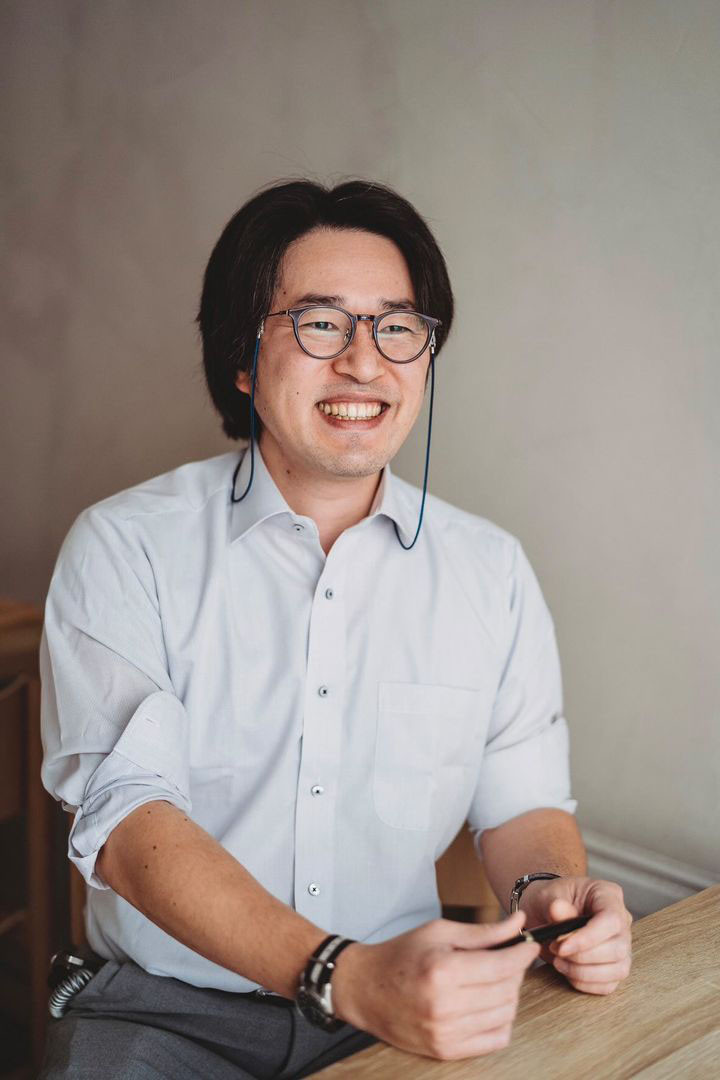
What inspired you to turn your artistic vision into a watch brand?
When I decided to start
my own brand, I was working as a web journalist for a major Japanese media
outlet. Through writing about crowdfunding campaigns, I came across countless
“microbrands” that were simply making homage watches. It seemed many were more
focused on profit than on genuine passion for horology.
Then I realized even
large, established brands were doing the same thing re-issuing or redesigning
old models because they knew what sold. That realization stuck with me like a
fishbone in my throat. I wanted to create something different to show that there
could be more to the world of watches than endless lookalikes.
With my background in design and experience as a visual artist, I felt I could bring something less common to the world of affordable watches where originality is often sacrificed for familiarity.
How would you
describe your design philosophy?
Thank you for asking —
not many people realize the importance of the philosophy behind design.
For my first two models,
the A-1 Auto and A-2 Auto, practicality was at the core. The A-1 was designed
so the crown wouldn’t hit the back of my left hand, and the A-2 so it could be
comfortably worn on either wrist. Both were functional, minimalist, and free
from unnecessary decoration.
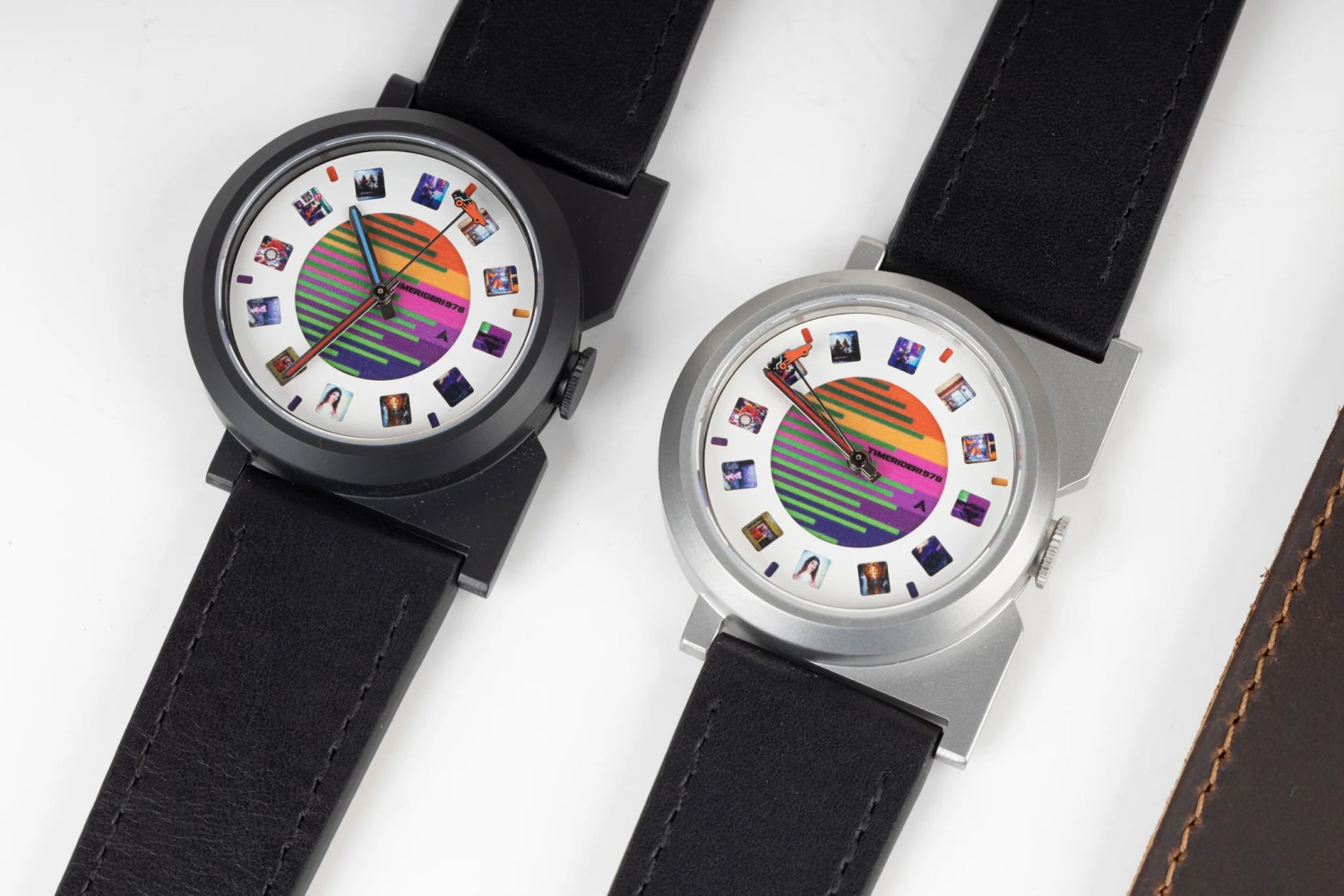
My later creations, such
as the Vinyl Record Watch and the upcoming Spaceship Watch, were born from a
desire for playfulness. After all, there are already plenty of practical and
affordable timepieces from brands like Casio. Rather than competing on functionality,
I wanted to return to my original motivation to make something truly different.
Designs often fall into what I call “convergent evolution,” where products unintentionally start to look alike because they pursue the same goals. To avoid that, I began designing watches that are more expressive, more artistic. There are many “fun” watches on the market, but most are cheaply made. My aim is to create playful yet well-made watches high in quality but still accessible.
How do art,
architecture, and design influence your creations?
A wristwatch today isn’t
a necessity a phone tells time more accurately. Architecture, however, is
essential; it shelters us. Yet even in architecture, it’s the artistic element
that brings joy to daily life.
The same principle applies to watches. A mechanical timepiece isn’t just a tool it’s wearable art, powered by your own motion. If an art museum is a structure that houses art, a watch case is like a miniature museum — protecting a piece of art that you can wear, admire, and carry anywhere. It’s something that can lift your spirits, showcase craftsmanship, or simply remind you not to miss your bus.
Could you share
the inspiration behind one of your most iconic models?
My most iconic model so
far is the Vinyl Record Automatic.
When I was a child, my
parents worked long hours, so I spent much of my time in my grandparents’ room.
My grandfather had a beautiful record player — I think it was a Panasonic, not
a Technics SL-1200 (though that model later inspired the watch’s design).
He used to play Japanese
children’s songs and the Star Wars main theme. I wasn’t allowed to touch the
tonearm, but I loved watching the vinyl spin, admiring the large album covers
and printed lyrics. It’s an experience modern formats CDs, MP3s, streaming
can’t replicate.
The Vinyl Record Watch was my way of capturing that nostalgic warmth and tactile connection to sound and memory turning it into something you could wear.
What does “time”
mean to you personally?
Observing time is
incredibly difficult. Humanity created watches as tools to measure it, yet I
don’t think we truly understand it. Time shifts with speed, gravity, and
perception a second can feel fleeting or eternal, depending on your state of
mind.
Our timepieces allow us to synchronize — to agree to meet at 10 a.m., for instance — but they can’t make people show up. Maybe being ruled by “objective time” isn’t the most meaningful way to live. I think the best approach is to enjoy life to the fullest while knowing that our time here is finite.
Do you
collaborate with specific artisans or manufacturers?
My material choices are
often guided by practicality and budget. Most of my cases use 316L stainless
steel, and the dials are typically brass with painted or applied elements.
I’ve had the pleasure of
collaborating with talented artisans such as Red 5 Watch Works
(@red5watchworks), 3dc.ing (@3dc.ing), and Duke Nguyễn (@duke.nguyen88). I also
hand-paint dials myself, creating micro artworks and one-off pieces.
Recently, I began working with Japanese Urushi, a natural lacquer made from the sap of the Urushi tree sometimes called “the blood of the tree.” Used in Japan for over 9,000 years, Urushi has largely been replaced by synthetic materials. By integrating it into my watches, I hope to help preserve this ancient craft and its sustainable artistry.
How do you
balance simplicity and depth in your designs?
Design, whether
minimalist or not, is always about balance. Even with years of experience, I
still find that once a design becomes physical, there are always small
surprises angles or proportions that behave differently in reality than they
did on paper.
So instead of perfectly “striking” a balance, I gently adjust between elements until things feel right. Creating something both functional and simple is challenging those ideas are like oil and water. The “emulsifier,” I think, is having a clear vision of the right ratio between the two. From there, it’s all about refining the smallest details edges, lines, textures until harmony appears.
Who is the
AndoAndoAndo wearer?
Anyone and everyone!
As I wrote on our
website:
“I love the word
inclusivity. Why? Because I always felt like I was excluded.
‘Men’s’ watches that are
too big to wear. ‘Women’s’ watches that are too small to read.
I wanted to create
something genderless, ageless, and fun. That’s why AndoAndoAndo exists.”
We’re not claiming to make watches for everyone, but we want to fill the gaps in the industry to make it more inclusive. That means mid-sized watches for small-wristed men and medium-wristed women, watches that don’t require hands to wear, and artistic designs that anyone can enjoy.
Could you
describe your creative process from
concept to completion?
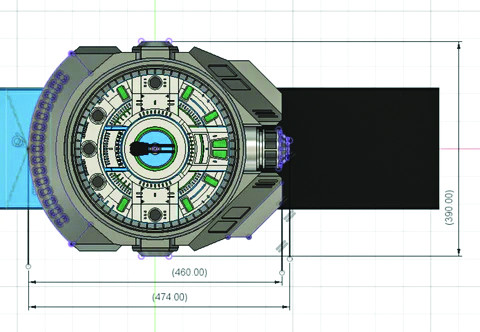
It usually begins with
an idea something that surfaces while
sketching or reflecting. I start with drawings, then move to Fusion 360 to
create a 3D model.
Next comes 3D printing
for prototypes, refining, and repeating until the design feels right. Once
finalized, I send it to the manufacturer, who reviews technical details like
closures and water resistance. After adjustments, a prototype is built, tested,
and sometimes redesigned before entering production.
It’s a patient, iterative process one that bridges imagination and reality.
What can we
expect next from AndoAndoAndo?
You can definitely
expect more “crazy” creations and maybe some less crazy ones too!
Beyond product
development, I’ve also been involved in connecting The Finnish School of
Watchmaking with Japanese watchmaking schools. Education and collaboration are
values close to my heart, and helping these two institutions begin working
together is something I’m truly proud of.