
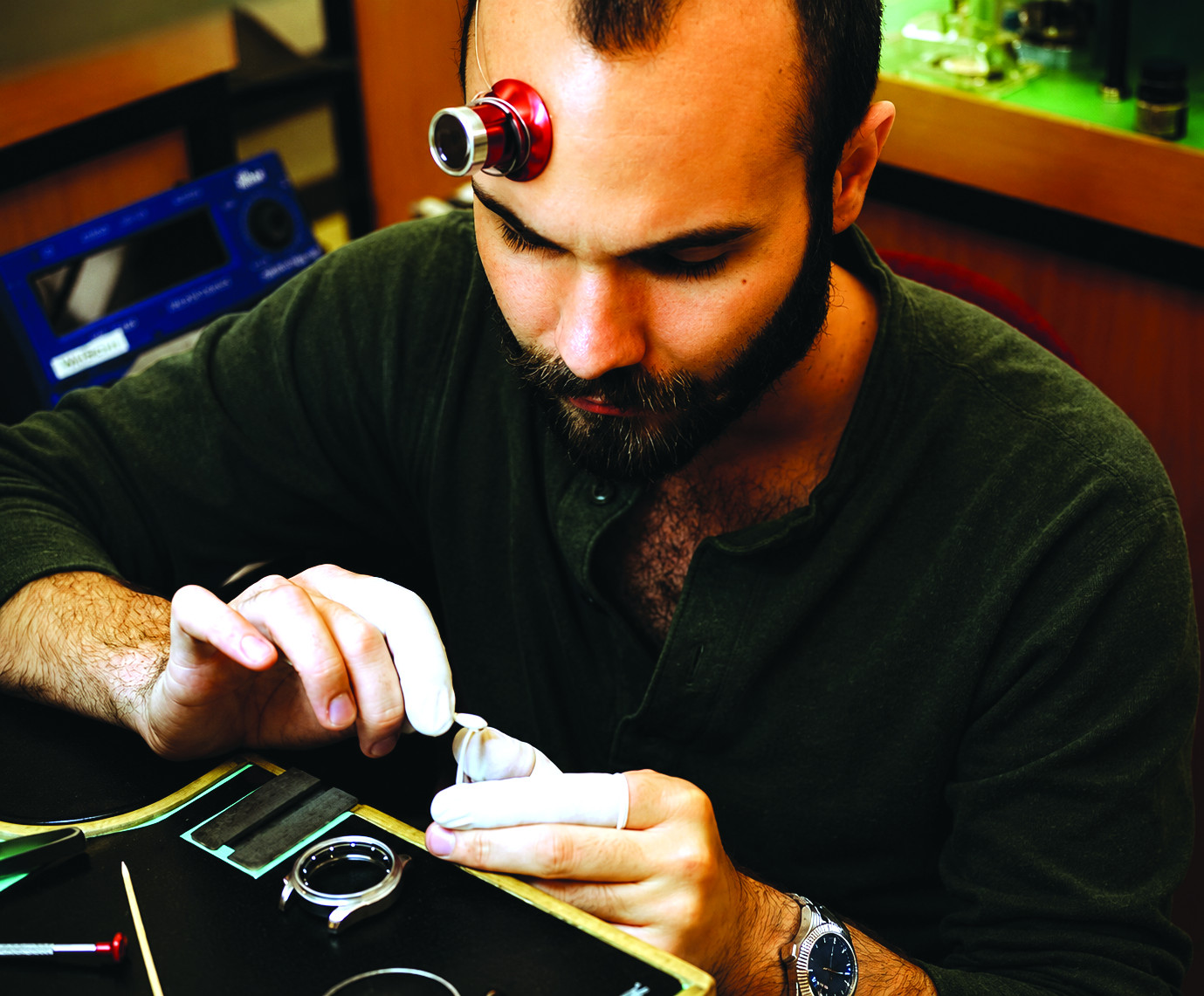
Nick Harris
Founder
Orion Watches
How
your great-grandfather’s Omega Constellation first sparked your passion for
horology?
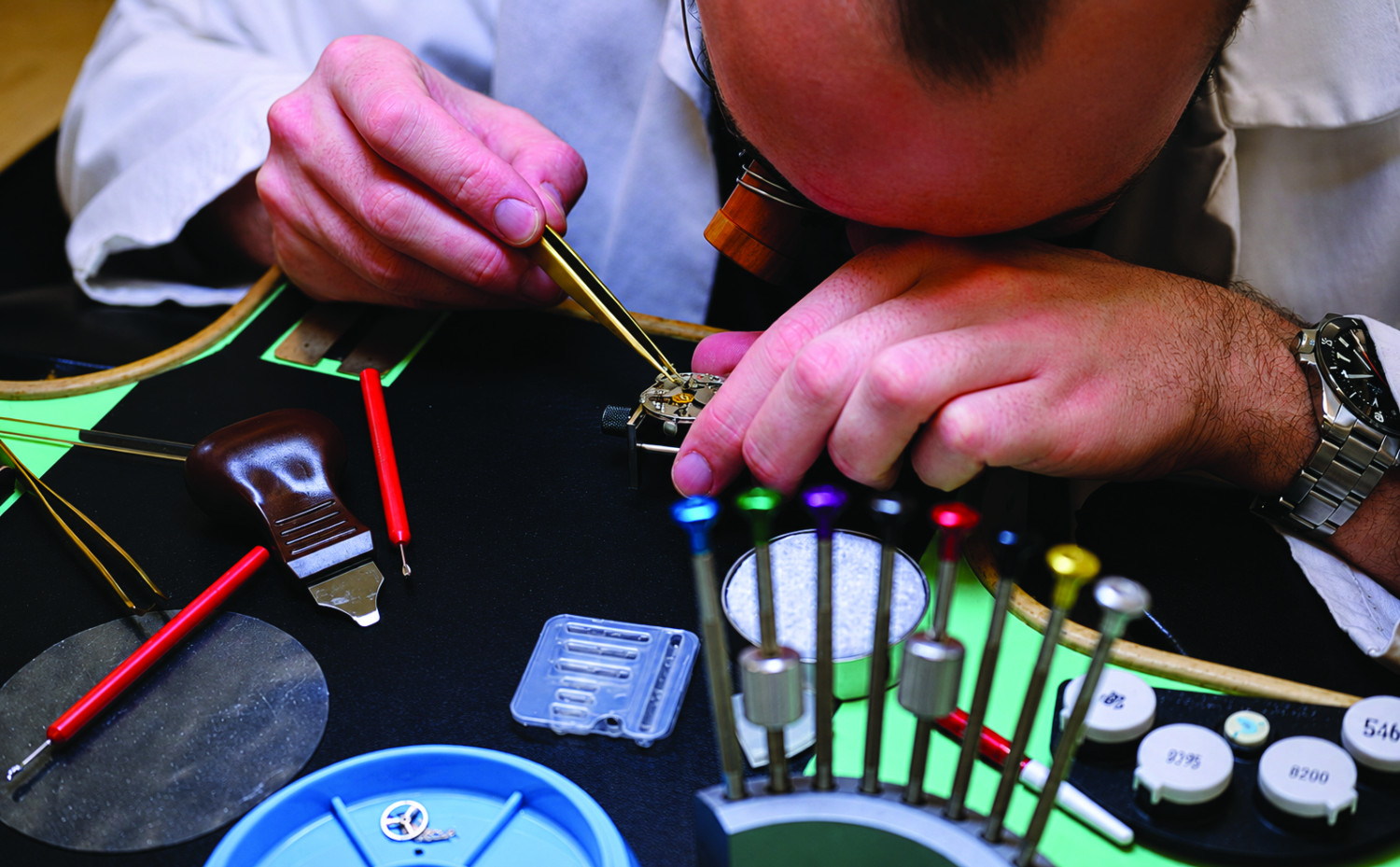
He had gone to Germany in the 1950’s and picked up a few Omegas which he gifted to his family. Later, they were all destroyed in a house fire except for the one that made it to me. When I got it, it was damaged and needed some work, I naively thought it was something I could quickly pick up and this sparked my research into horology and watch repair. It really drove me to develop the skills to be able to work on something like that without destroying or damaging it.
Did
you ever imagine that this would eventually lead to a full-time career in
watchmaking?
No, at that point I was really just looking for a hobby. One that would help me to understand mechanical systems, though one thing led to another and here we are.
What
was the most valuable lesson you learned during those early days?
I suppose it was perseverance and discipline. Back then there was no
social media that had any watchmaking on it. Guides and resources were
virtually non-existent. You could try finding people on forums to help, but you
were really left to your own devices. Watchmaking is really hard to learn like
this, mistakes are punishing and expensive, it becomes frustrating very
quickly. You have to be patient and pay attention to what techniques lead to
success and good results and which ones lead to damage and failure.
At
what point did you realize, “This is what I want to do professionally”?
I had graduated from college for biology and was taking some additional courses to prepare for graduate studies. I was a bit daunted by years and years of academia, it’s a big commitment and a long time to go down that path – at this point I was selling quite a few mods and they had become pretty elaborate. I was also manufacturing my own parts to support this business. Watchmaking school presented itself as a smaller time and financial commitment than a decade of graduate schooling. The thinking was, “Well, I love working on watches and I spend all this time doing it, I should give it a shot. Even if it doesn't work out, a two year setback isn’t much in the face of 10 or so years of academia.”
How
did that formal training shape your skills and philosophy as a watchmaker?
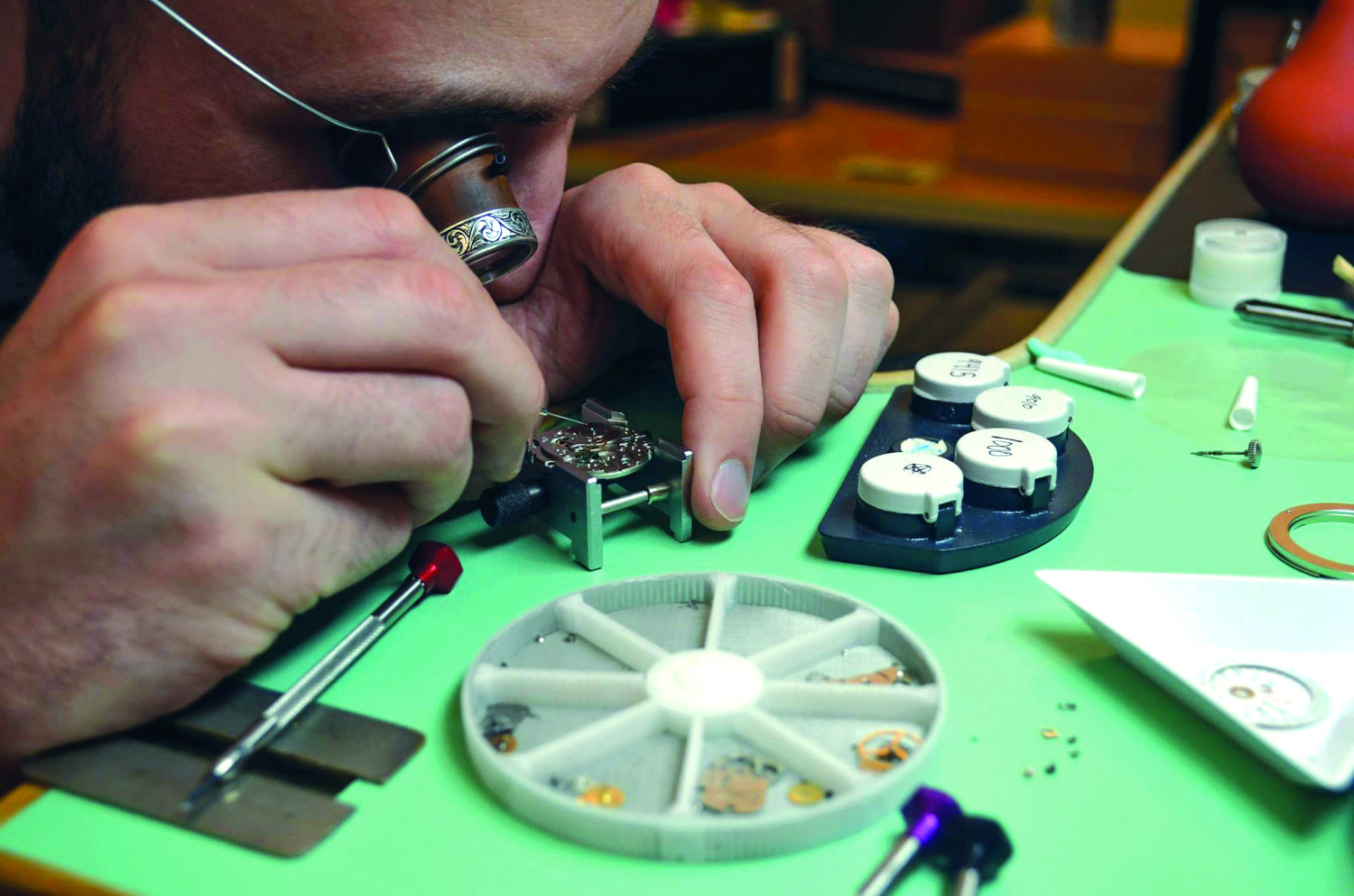
It totally solidified and developed all my skills. Some things I had
accurately converged upon by trial and error, but other things you don’t even
know about until someone shows you and teaches you. It’s a very thorough and
comprehensive education which gives you a confidence and mental toolkit to
approach watchmaking in a way that would be very hard to do without an
education, or at least take a much, much longer time to figure out for
yourself.
It gave me respect for people that take the time to learn good technique, preserve old world practices, and apply true watchmaking to their brands. You don’t need to be a crazy purist or anything, but in the industry at large there’s a big departure from “watchmaking” and brands really become about mass production, replaceable components, and marketing that lets them disguise these things as watchmaking.
Many
enthusiasts first came to know you through your Seiko modifications. How did
that hands-on experience influence your later designs at Orion?
My initial designs like the Orion 1 were designed to be easily modded with accessible engineering and a large compatibility with Seiko parts. I learned that not many Seiko modders wanted to buy a whole watch to modify and the people buying it were an entirely different demographic (for the most part). While I had fun with special editions and one-offs, subsequent models departed from this mentality and evolved with my knowledge of watchmaking, since the early models were made before I went to school and other models were designed during and after school. So, it really only affected models from before I went to school. Though, I still do think of watches in a modular fashion (hands, dial, case, movement, crystal) and these can all be slightly changed to create a watch that feels entirely different, that mentality still exists today. I try not to just use one case design on a single hand and dial configuration, it almost seems wasteful, especially since I know that people could be really drawn to one aspect of a watch but not another so reworking watches like this gives some people another chance to love something they were close to.
What
was the key turning point that made you transition from modifying watches to
creating your own from the ground up?
I had been working with manufacturers to produce dials, hands, crystal and various components to be compatible with popular Seiko models. I figured I was virtually having an entire watches worth of components made already, why not just go the extra step and make them all into my own watch?
Orion
Watches is known for its distinctive focus on ergonomics and comfort, why was
that such an important design principle for you?
I have small wrists and a sensitivity to uncomfortable watches. A lot of watches that I like just don’t feel comfortable to wear. They’re too big or obtuse in some dimensions, maybe they’re too long or flop around the wrist weird, maybe they kinda hurt or agitate the wrist when they’re snugged down. It seemed to be something seriously neglected in the watch industry. Back then, almost all dive watches were these big chunky things. I found refuge with vintage watches, but these lacked the robustness of modern watches in many ways – the dimensions, however, were always great. The market looks different today, but I still think there’s importance in design that considers the human interface, lots of watches seem to be designed just to be a cool watch then just interface with your wrist in a slightly weird way. I like my watch to disappear on my wrist, I want to forget that I’m wearing it, to me, that’s what good design should be for wearability.
How
do you approach design do you start with technical specifications, or does the
aesthetic vision come first?
I have a very visual mind, I can often entirely or mostly envision a watch in my minds eye before design begins. Though, that’s not to say that things don’t change once it starts getting drawn out. It’s common that what I was visualizing just doesn’t come together how I thought it would, at that point it’s easier to chip away at tweaking designs. I feel like I’ve found a bit of identity in the Calamity and Hellcat, so evolving from those designs or finding a common thread in them to bring forward to the next watch helps keep everything connected and having a brand cohesion that I do think a lot of microbrands kind of miss the mark on.
How
do you communicate to customers that these qualities matter more than raw
specs?
The specs that brands love to check off are only a couple of the actual dimensions of the watch. As such, they are largely meaningless beyond the most obvious bit of information they convey (like lug width, length, diameter, etc) since they only communicate a constrained dimension in a flat plane. Lug width? Yes, you can imagine a watch with 20 or 18mm lugs, but it does nothing to convey the curvature or how the bracelet attaches to them. Diameter? What about the thickness, the radiuses, and all the other measurements that give way to a watch in 3D space? You could design a thin watch with 20mm lugs and a reasonable lug to lug, but it could very flat and sit on your wrist like a plate and tip around weird once you’ve tightened the strap down. Focusing on a couple popularized dimensions, I think, lets people feel like they’ve done their homework and can understand how a watch exists in space and lets a brand feel like they’ve achieved something dynamic and wearable by checking off a list of dimensions that are most popular – it really does overlook how a watch sits in space. I’m not saying these dimensions aren’t important and they do convey important information, but I’ve also made a 38mm watch that wears larger than the 40mm watch I made while I had people balking at the 38mm size as too small. I do think reducing a watch to a check list will cause people to miss more important and holistic aspects of it, but I also can’t stop those people from approaching watches like that, but if I can put a 38mm and a 40mm watch in front of people and consistently have people tell me the 38mm one is larger then the reality is these specs alone are not translating enough of the watch. It’s also a challenge of an online marketplace, to some degree we’re confined by numbers and pictures until people can see one in person.
What
advantages and challenges come with building and sustaining a brand in this
category today?
It’s a global market and there’s currently a bit of saturation and tons of competition. Unfortunately, a lot of that comes from factory direct brands that masquerade as an actual brand while using their cost basis (much lower) to undercut brands. People are also largely skeptical of new brands, so starting a brand today I imagine would be very hard. There are also brands with huge marketing budgets that prioritize selling volume at thinner margins and the marketing generally works. There’s a lot of competition with people that may be coming from a background with a big capital injection or a factory which has massive advantages in costs and logistics (though their names are usually awful and designs are generally very derivative). Supply chains are also being taxed heavily, which in time will alter what components and factories get chosen and how business is done. Time will tell.
Do
you believe this trend is sustainable, or do you see the market consolidating
in the future?
When I got into the space there was a bit of a boom as well, it’s all cyclical. Though, social media and marketing strategies as well as sentiment has changed today compared to 10 years ago. I don’t believe it’s sustainable, I have seen some brands closing up and I suspect in 5 years there will be a fraction of the brands we see today. I fear that many of the small businesses with a lot of passion and unique identity will eventually succumb to tariffs and being undercut by factory direct brands. The result will be a boring and less diversified industry with the giant macro brands then factory direct brands with their cheesy knock-offs at the lower end with few choices in between. I hope that that trajectory doesn’t materialize, but I see it happening more and more each day. I love seeing unique and personal watches, I find the politely worded “homage” industry very disappointing, it would make me sad if that were the natural replacement for microbrands – it happened to a large degree in the Seiko modding space. I check in on it every now and then, what was once a bunch of unique designs is now people assembling virtual counterfeits save a couple differences of branding.
Looking
ahead, how do you see Orion evolving will you maintain a small-batch, artisanal
approach, or is there a plan for larger-scale production?
That depends on a lot of factors, I’m not into the artificial scarcity and FOMO marketing, so I try to estimate the demand and batch size so that people have the opportunity to get the watch they want – but at the same time, spending too much time on one design is often at a the cost of doing other designs. I like to keep designs moving forward.
Do
you envision incorporating more American-made components or even movements in
future Orion models?
Maybe, this is still a largely non-existent industry (movements),
utilizing such manufacturing would put the watch into pricing of 5 digits. I
can see using more American components and labor, for sure, but a whole
movement is both ambitious and expensive.